Causes


free debate


Showing posts with label Medicine. Show all posts

December 5, 2011

Practical Science: Exercising to Sleep

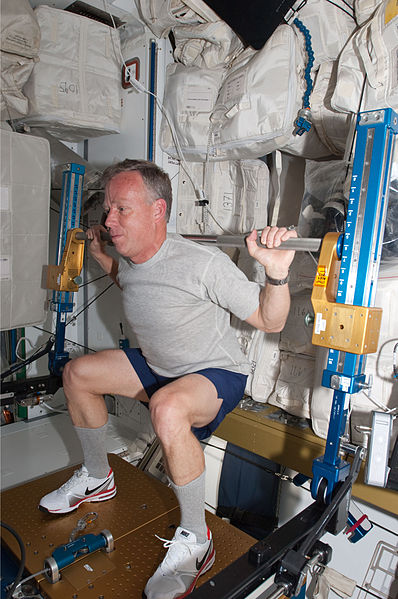
 NASA astronaut Steve Lindsey, commander of STS-133, 
exercising on the International Space Station
Photo credit NASA via Wikimedia Commons
I write a lot about science that overturns everyday notions. More often, though, I find science confirms what most anyone on the street could tell you. Even if those stories don't make as catchy headlines, they can still be really important. Case and point, a new study to be published in the December issue of the journal Mental Health and Physical Activity has found that people who do moderate to vigorous exercise for at least 150 minutes a week sleep better and feel less drowsy during the day. Not just a little more sleep either: a full 65% increase in reported sleep quality.

I have found this to be true in my own life as well. The nights I don't sleep well are when I am trapped inside all day writing a paper or watching videos on the Internet. My uncle is a rancher in Wyoming and says he has never has trouble sleeping. It is really nice to see a study like this to confirm my own anecdotal experience.

So, if you do have trouble getting through the night, try to find a half hour each day to ride a bike, run, swim, hike, lift, climb, whatever works for you.

September 20, 2011

Using Gaming for Good

Video games have become one of the go-to activities to kill time and fight boredom in our digital age. They come in all flavors and varieties; some prefer first person shooters, while others (myself included) would rather play exploratory RPGs. There are concerns and research on the effects of those games, but that's a story for a different day. Instead, let's focus on the purpose of video games. Most are just games, with no purpose outside of entertainment. But a few help progress science, such as one that modeled an HIV enzyme in just three weeks, where the best computer models failed.

...[A] microscope gives only a flat image of what to the outsider looks like a plate of one-dimensional scrunched-up spaghetti. Pharmacologists, though, need a 3-D picture that "unfolds" the molecule and rotates it in order to reveal potential targets for drugs.

This is where Foldit comes in.

Developed in 2008 by the University of Washington, it is a fun-for-purpose video game in which gamers, divided into competing groups, compete to unfold chains of amino acids -- the building blocks of proteins -- using a set of online tools

....

Cracking the enzyme "provides new insights for the design of antiretroviral drugs," says the study, referring to the lifeline medication against the human immunodeficiency virus (HIV).

It is believed to be the first time that gamers have resolved a long-standing scientific problem.

This to be awesome, in my opinion. I've played with Fold.It a little bit, but not enough to really give a review of the game.  But the fact that it is being used to do this sort of research is fantastic, and I look forward to seeing what other discoveries can be made with it, as well as what applications those discoveries may have in the medical field.

September 5, 2011

What Not to Buy: Critical Thinking Applied

Time Moneyland has put together a great list of "12 Things you should stop buying now." This is a great application of critical thinking and has something for everyone. The list covers everything from new college textbooks to super high SPF sunscreen. One of the things I also really like about the way this is put together is that it includes the exceptions to the rule. For example, they rightly point out that some people with really fair skin may need very high SPF sunscreen, however the difference between SPF 30, and SPF 50 is much less then most people think. My personal favorite, though, was probably number 1.
Homeopathy

The pitch: Fight back against the aches, chills and other misery-inducing symptoms of the flu with herbs or vitamin supplements.

The truth: We’ll let the CDC handle this one. From the agency’s website: “There is no scientific evidence that any herbal, homeopathic or other folk remedies have any benefit against influenza.”

The exception: Chicken soup, especially if it’s homemade. No, it won’t cure anything, but if it makes you feel a little less crummy, slurp away.
If you are unfamiliar with homeopathy, it consists of diluting a substance until none of the substance remains and then calling it a cure. Nonsense is nonsense, no exceptions. And really who can argue with some nice chicken noodle soup when you're sick?

August 10, 2011

Turn on Your Brain


The other day, while working with some high school students, one of them turned to me and started a question, "You know how we only use 10% of our brains...?" I cut her off right there. If the assumption that we only use a small portion of our brains was a premise for her question, then the question couldn't possibly be valid.

The 10% myth is incredible pervasive, considering how silly it is upon further inspection. Have you ever heard a neurosurgeon say something like, "Oh, well, the tumor's in your inactive brain area, so we're not going to worry about it?" Of course not, because that's not how the brain works.

First of all, in proportion to body size, humans have the largest brains of any animal, with a 1-to-50 brain weight to body weight proportion. As with all physical characteristics, this was shaped by natural selection. We adapted to have higher intelligence, by having larger and larger cerebral cortexes, the region of the mind used for problem solving, language, and abstract thinking. The cost of this is that it uses a lot of energy. Humans have to eat a lot in order to power our big brains, or we'll die. If we only used 10% of this grey matter, natural selection would quickly get rid of it.

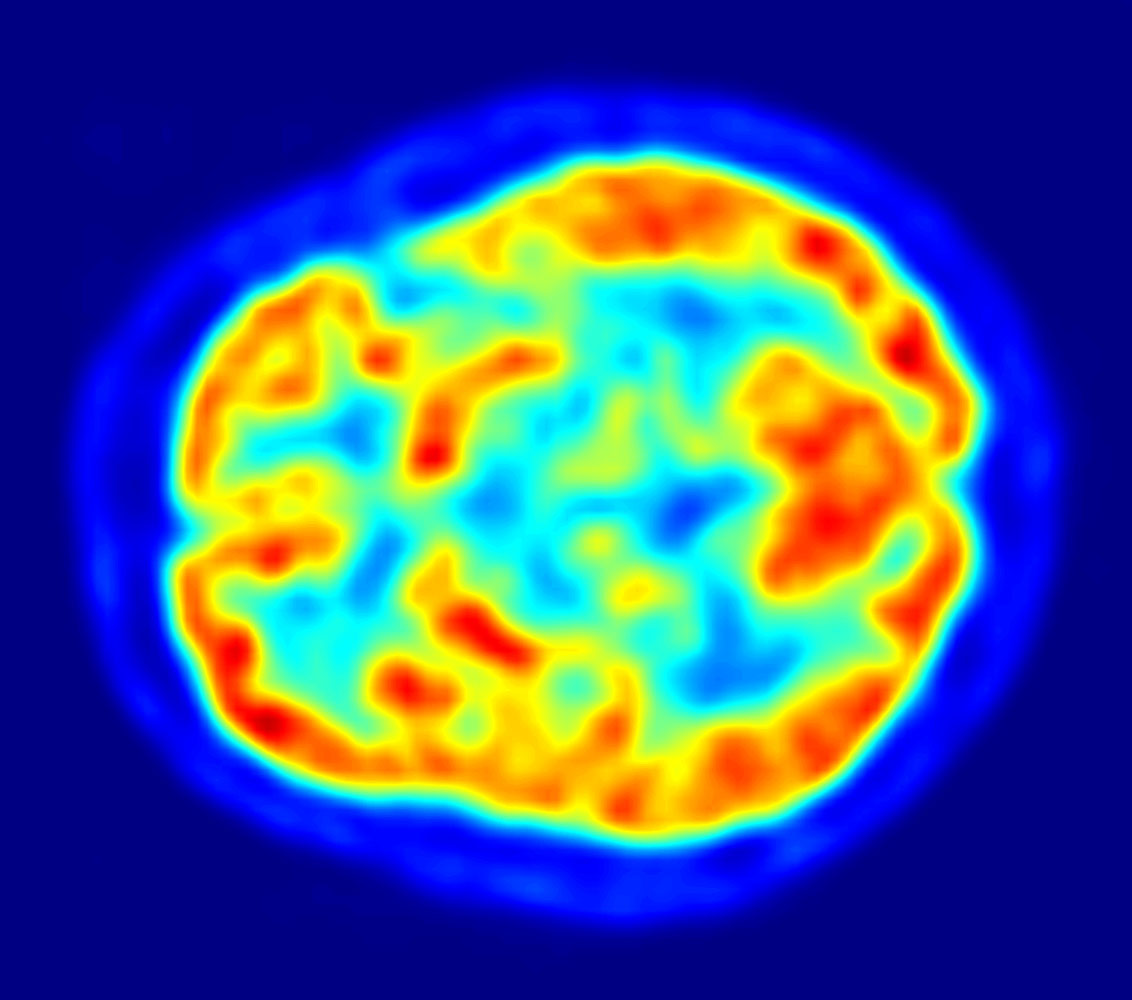
Brain Scans: ADHD Brain on Left, Normal on Right
We can also see how much of the brain gets used (source). Using PET or fMRI scans, we can watch a brain work. While not all of the brain is active all of the time, it's fairly active even doing the most simple tasks, like eating or sleeping. Even if all the neurons aren't firing, the glial and other support cells are active, and they make up a large percentage of the brain as well... far more than 10%. On top of that, damage to far less than 90% of the brain is incapacitating or fatal. Some proponents of the myth suggest that this is because only 10% of the brain is used for conscious functions, while the rest is subconscious. This isn't really supported by the data either, however; those same scans show that more of the brain "lights up" the more complex a task is occurring. Also, the idea that only 10% is conscious or active assumes the brain is very compartmentalized, that chunk of gray matter A does task A and only task A, and chunk B does something different. This isn't really accurate either. While some brain function is more or less focused in specific spots (the language center or vision center in the brain), it is not so black-and-white.

Besides simply being a major piece of misinformation, the 10% myth is important because it's a main argument of psychics and mediums. They flaunt this idea that the brain has huge untapped potential, and that scientists don't know how it works. Obviously, if you can just learn to turn on that unused portion, you too can have psychic abilities or superpowers. It's a comforting idea, to think that you can have more brainpower, in case of emergency. But from a scientific perspective, that's just not going to happen. The brain evolved to be used, not to sit dormant until magically being unlocked. The 10% claim is 100% myth.

This article was originally posted by me on Teen Skepchick, where I blog about science, skepticism, feminism, education, and more for the skeptical teen.


Image from Wikimedia Commons

May 11, 2011

Light Relief: Flashy Lights and Deceptive Advertising

We have all seen infomercials for products that seem silly, if not useless. I went through a phase where I would actually watch infomercials for the sheer ridiculousness of the advertising. The advertising of some products however I think can cause harm such as in the case of a product called Light Relief.

I think the best way to review Light Relief is to go through the claims they make on their website. First, however, I want to describe their product. Light Relief is is a hand held unit that contains 59 Light Emitting Diodes (LEDs). The majority of these LEDs give off visible light the same way any handheld flashlight would. 24 of them are emitting infrared light. Infrared light is just another color of light which we can't see, but which we sometimes experience as heat. I would be quite surprised if the heat coming off those 19 LEDs would even equal that of a heating pad. So with that foundation let's move on to the real question: does it work? Light Relief makes two main claims on their website. I want to look at each of these individually.

Claim 1: "[Light Relief] relieves muscle and joint pain, improves flexibility"
Anyone who has used a hot pad knows that heat can relieve minor muscle and joint pain. This is nothing new to medical science. Light Relief, however, is unlikely to even work as well as something like a heating pad. The reason is infrared radiation actually covers a wide range of wavelengths of light. In order to get the effect they are claiming you would need to focus the LEDs to specific wavelengths. I have not found any evidence that Light Relief has done this.

Claim 2. "[Light Relief is] safe, non-toxic and FDA-cleared"
This one is a little more tricky. The language used in this statement could confused just about anyone who isn't at least a little familiar with how the FDA works. The FDA approves products for two separate things, safety and effectiveness. Light Relief has been approved for safety but not effectiveness. How do I know? At the bottom of their webpage, in small dark font on a dark background, are the words "These statements have not been evaluated by the Food and Drug Administration. This product is not intended to diagnose, cure or prevent any disease." These words are a huge red flag on any product. Imagine if a new drug entered the market and admitted that they had not show the FDA the product worked. This is an equivalent admission by Light Relief. I have little doubt that their product is as safe as a flashlight, but if it doesn't work, why should we care?

So in the end I am left with one question. How is Light Relief (~$80) different from a standard LED flashlight (~$10) or a heating pad (~$20)? I know flashlights that do more and heating pads have actually been studied and shown to work. My advice, if you want to spend some money to make light, get one of these.

April 8, 2011

Storm: An Introduction to Skepticism

Tim Minchin is a fantastic comedian/musician from Australia, and a few years ago came out with a 9-minute beat poem called "Storm." Since then, over the course of two years, an animation production team has worked diligently to animate this wonderful work. It's got a very strong skeptical slant throughout, and an inspirational message at the end. Some language might not be appropriate for little kids, but past that is absolutely fantastic. Absolutely worth a watch.


Tim Minchin's Website
Storm Movie Official Website

April 1, 2011

More Amazing Medical Science: Regeneration

It's been an idea in science fiction for years. What if people could regrow their own body parts? The extreme example, and my personal favorite, comes from the British TV show Doctor Who, where the main character, an alien Time Lord, can replace every single cell in his body after suffering some fatal injury, thereby cheating death. He's also been known to regrow a hand, if cut of within the first 13 hours of his regeneration cycle. The idea is similar to a real phenomenon in nature: some animals can regrow body parts if those sections are lost, Think the tails of lizards or sea star arms. Unfortunately, humans do not share this handy ability to revive lost or diseased tissue, so we rely currently on the imperfect process of organ donation. The waiting list to receive an organ donation is over 100,000 people long, and many of these die before a good match becomes available. Even if they do get a replacement, the match is often not perfect: the new organ is from a different person, and so has different DNA. Sometimes, these replacements are rejected. The patient's body does not accept the new tissue as part of itself, and the immune system attacks it, potentially causing the organ to fail again, putting the person in the same, if not worse, condition then before the replacement.

Here's where new medical technology could step in to save the day. Bioartificial organs are created by taking healthy cells from the sick organ of a person, and using a scaffold - a synthetic or organic frame to make sure the cells form correctly - to grow a new one. This would solve the rejection problem: the immune system would recognize the replacement as part of the individual, because it is. The technology to complete this process is also fascinating. It's similar to a 3D inkjet printer: the cells are placed, one by one, like drops of ink into the shape of the new organ. This is incubated to encourage it to grow like living tissue, instead of dying, and then can be transplanted just like any other organ. The main researcher for this technology, Dr. Anthony Atala, discussed it in more detail in a TED talk.


I've known several people who became organ donors, and several others who have needed organs. It's a tough process on either end, and often risky for both donor and recipient. Technology like this could help make the process a bit easier, and improve the success rate. It's truly a testament to what medical technology can do to improve our lives.

March 23, 2011

Medical Technology is Amazing

Burns can easily be some of the worst injuries a person can sustain. The most well-known type of burn is a thermal or heat burn, caused by touching something hot or by fire. Most people have had a first-degree burn; sunburns fall under this category. They are usually characterized by pain, redness, and some blistering. First-degree burns aren't particularly serious, and can usually be treated at home. Second-degree burns are also common, but are much more severe. When a person has a second-degree burn, the outer layer of skin has been burned away completely, and the dermis (the live skin underneath) is partially burnt. These burns are very prone to infection, as the outer layer of skin is the body's first defense against bacteria, viruses, and fungi. Without it, painful and serious infections are easy to get. There are also third-degree burns, in which both layers of skin are completely burnt away, and muscle can sometimes be burnt as well. Those are the worst type, and are much less common because of their severity. For now, though, I'd like to focus on second-degree burns.

In the past, treating second-degree burns was a long process, and infections were hard to avoid. To replace the lost outer skin, grafts have to be grown, either artificially or taken from another part of the patient's body. These grafts are very thin, a sheet only a cell thick. These grafts are easily damaged, are prone to infection, and take weeks to fully heal a burn. A new prototype technology, the skin gun, may make the healing process a lot less painful.

It's an amazing innovation, but a simple idea. Stem cells develop rapidly into all the necessary types of cells, and are ideal for this sort of application. National Geographic made a good video explaining how this works, and featuring a real patient who has had the procedure done. The results are spectacular. I've embedded the video below; however, take note that it does contain graphic images of second-degree burns, which are not for the faint of heart or stomach. Click to see the video below.

February 28, 2011

Phantom Limbs and Mind Tricks

Ever wanted to be like Zaphod Beeblebrox*, and have a third arm attached? Well, according to recent research, this may be possible.

Each of us has a mental body image, which corresponds to our actual physical bodies. Thus, we experience having one head, two legs, two arms, etc. It seems likely that this body image is limited by the way our bodies actually are. Thus, an amputee can still "feel" the limb they're missing, but a person cannot "feel" a third arm. Or can they?

Neuroscientists at the Swedish Karolinska Institutet performed an experiment on healthy adult volunteers, in which they placed a realistic rubber right arm on a table next to the subject's real right arm, and covered it with a sheet, so the subject could not tell at a glance which arm was theirs at a glance. Then, as the volunteer watched, both of the right arms were rubbed with a small brush simultaneously. One would expect that a person would only feel one brush, the one touching their real hand. Instead, the brain gets confused, and resolves the issue by accepting both right hands as real. The person perceives having three arms, instead of two. They even reacted when either right hand was threatened with a kitchen knife, regardless of whether or not the hand was real.

It's a promising result for prosthetics and other medical applications, and those who are often at risk. If a limb can be accepted into the body image, as a person's own, then it can be controlled, theoretically, just as easily as a real limb. It's also just an interesting nuance to our understanding of how the mind interprets physical experiences. It's a fascinating demonstration of how little we really understand our own perception, and how flexible our brains can be.

Source: Science Daily-Scientists Create Illusion of Having Three Arms

*Apologies to those who haven't read Douglas Adams' Hitchhiker's Guide to the Universe, or who don't like it.

July 19, 2010

Using Courts to Silence Science

John Adams famously said "Facts are stubborn things." In life and in science we sometimes get the answers we want, and sometimes we don't. When the facts don't go your way you only have a few options. Change your opinion, ignore them, or try to get rid of them. I'm sure we all have someone in our lives who is so stubborn they just won't change to new information. Our natural response as humans is usually to one of the latter two. Scientists strive to do the first even though it can be hard to give up a cherished idea. Personally, I like being right. This makes it hard to admit when I am wrong so I consciously work to override that gut reaction. Still there will always be those who refuse to accept those stubborn facts.

In 2008 Simon Singh wrote an article that said chiropractors were claiming to treat disease without the evidence to support those claims. In response the British Chiropractic Association (BCA) responded not by showing the evidence, not by responding with facts. Instead they tried to get rid of the facts by suing Simon for Libel. As the exposure of the trial grew it became more and more apparent that they did not have the evidence to back them at at one point they even advised chiropractors within their association to take claims off of their websites. It took almost before two years the BCA dropped the charges and only after Simon had spent over 200,000 Pounds (aprox. $307,500). The BCA couldn't change the facts, so they tried to get rid of them.

Now in the last month a similar series of events has begun here in the US. When I have questions or want information on quack or alternative medicine one of my first stops is Quackwatch.org. It is an excellent resource for these issues with well written articles that cite the scientific evidence and explain its significance on lots of issues. On June 18th this year the owner of Quackwatch.org, Dr. Stephen Barrett, was sued by Doctor's Data also for libel. They neglected to tell Dr. Barrett where he mistaken in his articles but that he must take them all down. Doctor's Data can't change the facts, so they are trying to get rid of them.

Now I fully admit that in such a short article I am leaving out lots of the complexity in each of these cases. I also need to point out that many cases of libel are legitimate. That said, using libel to science your critics is dishonest, deceptive, and unscientific. This approach of using the courts is not just used by alt. med practitioners but also creationists and other groups who don't have the evidence to play by the rules of science. I find attempts to science the evidence and facts despicable. I think the best thing to do in these cases is grow awareness. The more people know this is going on and its risk to the public, the less  effective it might be as a strategy.  Dr. Stephen Barrett and Simon Singh have the resources in court but many who criticize quacks and cranks do not. "Facts are stubborn things," but they can be buried in the absence of a vigilant public.

April 2, 2010

Untangling the Truth about Autism

There are a lot of claims made about autism. What causes it? How common is it? What are the common symptoms? Is there a cure? I can't go through every single claim ever made about autism here, but I'd like to take some of the common ones and sort out myth from fact, and explain why.
  • One out of every 110 children is affected by autism in the United States, including one out of every 70 boys. (source)
    This is fact, but a bit misleading. The data that the Autism Speaks report uses is from the CDC's autism report, found here. The study compares the autism rates of 15 different communities, and includes every instance of an autism spectrum disorder. This means that both a very mild case of Asperger's syndrome will be counted as a hit equally to a debilitating case of severe autism, so long as they are diagnosed. Thus, while the numbers are accurate, the statement would be more correct stated as: "One out of every 110 children is diagnosed with an ASD in the United States, including one out of every 70 boys."
  • Studies have shown that environmental toxins like mercury and pesticides can trigger autism. (source)
    This one is plausible. There is some evidence that autism prevalence rates are higher where there are higher concentrations of heavy metals and pesticides before birth. However, the results of these studies are still fairly preliminary, as far as I could find from my research, and more studies will have to be done before there is a true consensus on this.
    • Sources:
      DeSoto, M. Catherine, 2009. Ockham's Razor and autism: The case for developmental neurotoxins contributing to a disease of neurodevelopment. NeuroToxicology, 30(3):331-337
      Abstract at PubMed
  • There has been no study that has directly linked a pure genetics basis for autism. (source)
    False. Plain and simple. There are quite a few studies that link genetics to autism. For instance, this study provides a quite strong correlations between autism and a genetic mutation. This one provides a relatively complete summary of the genetic basis for autism. Even the DeSoto article I linked to above discusses how there is a genetic predisposition to autism, depending on how sensitive an individual is to the toxins. The genetic basis for autism is well-established scientifically.
  • Vaccines cause autism (source- note that this is implied throughout the whole "Vaccines" section of the website, but is never stated directly)
    False. This is by far the biggest autism controversy. Because of this, there has been a lot of scientific research. After all, if there was something to the claim, there would be major reason to change the vaccines given. But the consensus has come back with a definitive result: autism is not caused by vaccines. A really good summary of the current evidence can be found in this article. The one study that did show a link between the MMR vaccine and autism was retracted earlier this year, as it was shown to be a fraud. There is no cause for concern that vaccinating children will give them autism. Not vaccinating them is likely to cause them polio, measles, and other potentially deadly diseases, as well as spread those illnesses to other children (source). The risks of not vaccinating far outweigh those of getting the vaccinations.
  • Autism is reversible (source)
    While there are treatments available that can help lessen the symptoms of autism, this claim that autism is completely reversible is, as of this point in type, false. As I mentioned here, autism is a disorder, not a disease. A kid doesn't "get sick" and start acting autistic; instead, something is wired differently in their minds, whether due to a genetic mutation or to exposure to toxins during development. As stated on the Autism Speaks website:

    Most parents would welcome a cure for their child, or a therapy that would alleviate all of the symptoms and challenges that make life difficult for them. Just as your child's challenges can't be summed up in one word, they can't be remedied with one therapy. Each challenge must be addressed with an appropriate therapy. No single therapy works for every child. What works for one child may not work for another. What works for one child for a period of time may stop working. Some therapies are supported by research showing their efficacy, while others are not. The skill, experience and style of the therapist are critical to the effectiveness of the intervention.
This list of claims is far from comprehensive, but these are the five I hear most often, and that cause the most controversy. If you have other questions, feel free to send me an email using the link to your right. Or, better yet, do some research of your own. Talk to a medical doctor, preferably one who specializes in neuroscience; search for relevant studies on PubMed; gather knowledge to be able to sort out fact from fiction. Be aware that not everyone uses science-based medicine, and that even the most well-meaning people can give bad, and potentially dangerous, information. With a bit of skepticism and a little work, though, it is always possible to find good information to make the best choices you can, especially concerning things like autism.

If you want more general information on what autism is, take a look at What is Autism?

March 31, 2010

What is Autism?

In the media, the topic of autism has become increasingly prominent over the past few years. Although I do believe that there needs to be more awareness of autism, the hype over autism has put out a tangled mess of myth and misinformation about what autism is, how its caused, and how it can be treated. I'd like to take some time and try to clear up what's true - and what's not - concerning autism. But before I can really do that, I think I need to define what exactly autism is.

Autism is a mental disorder that usually appears in children before the age of three. Autism is characterized by a lack of development in social interaction, language, and behavior. Some of the "warning signs," according to Mayo Clinic, include:
Social skills

  • Fails to respond to his or her name
  • Has poor eye contact
  • Appears not to hear you at times
  • Resists cuddling and holding
  • Appears unaware of others' feelings
  • Seems to prefer playing alone — retreats into his or her "own world"

Language

  • Starts talking later than other children
  • Loses previously acquired ability to say words or sentences
  • Does not make eye contact when making requests
  • Speaks with an abnormal tone or rhythm — may use a singsong voice or robot-like speech
  • Can't start a conversation or keep one going
  • May repeat words or phrases verbatim, but doesn't understand how to use them

Behavior

  • Performs repetitive movements, such as rocking, spinning or hand-flapping
  • Develops specific routines or rituals
  • Becomes disturbed at the slightest change in routines or rituals
  • Moves constantly
  • May be fascinated by parts of an object, such as the spinning wheels of a toy car
  • May be unusually sensitive to light, sound and touch and yet oblivious to pain
One of the tricky things about autism is that it's not a single, easy-to-define thing; it's actually a whole range, known as the autism spectrum disorders. Some children (and adults) have such a mild case that it is never diagnosed, and they live perfectly normal lives. Many who do get diagnosed also fall in this category, and eventually learn the behaviors accepted in society by rote. Only in moderate to severe cases does autism really start to negatively impact a person's life. Some never learn to speak, and have below-average IQ. Others have high-functioning autism; that is, they have above-average intelligence, but often can't communicate what they know well due to their autism. Savants are often autistic; they are brilliant at mathematics or music, but severely socially and/or behaviorally impaired.

Another important point is that not everyone who displays some of these symptoms is autistic. The autism spectrum is very broad, and contains a lot of symptoms. So, there are certainly instances where other things, such as an auditory processing disorder or clinical shyness, may mimic autism. A person I know, for instance, has an auditory processing disorder, and he took a long time to start talking. He often didn't respond to his name or to questions, particularly when he could not see the person talking to him. He has an unusual speech pattern. In extremely crowded and loud environments, he would even sometimes sit in a corner, cover his ears, and rock back and forth. Finally, he is a very talented musician. But he's not autistic. His parents took him to have his hearing checked, and discovered the auditory processing disorder. He wore filters in his ears for a few years while he learned to manage the sound, and now it's impossible to tell that he has any sort of disorder at all.

This post is getting rather long, so I'll wait until April 2nd, a.k.a World Autism Awareness Day, to go through some of the most commonly heard tidbits about autism. Because there is so much information - and misinformation- surrounding the topic of autism, I want to do full justice to sorting out what's true and what's not, so it deserves a post of its own.

UPDATE: The post tackling autism myths, Untangling the Truth about Autism, is now up.

February 25, 2010

Practical Science: Spectroscopy

A few times in the past I have written about how astronomers use light in various ways to learn about objects millions of miles away. Spectroscopy is simply one of the fundamentals of astronomy, but the other day I had someone ask me what the more everyday uses for spectroscopy are. Why is spectroscopy important to the everyday person? As we sat and talked, we came up with more and more ways it's used.

Spectroscopy is the study of light. In astronomy, we use it to find everything from composition, to temperature, to velocity, to extrasolar planets, and the list goes on. But how does this affect us? One of the first things that came to mind was communication. Our cell phones use radio waves to communicate with cell towers. These are the same radio waves we use to study the earliest moments of the universe. The microwaves that we use to cook our food are also part of the radio spectrum.

Healthcare is another area where examples are plentiful. X-rays and CT scans are both used in hospitals on a regular basis. They are also used to help us understand some of the most energetic places in the universe. You can get a sunburn because of ultraviolet light that penetrates our atmosphere. This same form of light gives us insight into the structure of the clouds of Venus.

Gamma rays are the highest energy form of light and are used by geologists to find minerals or other materials under the earths surface. Infrared, a much lower energy form of light, is used by weather satellites to help us know the forecast tomorrow.

All of these technologies are things we have come to rely on, and none of them would be possible without this obscure part of physics.

February 16, 2010

Practical Science: Shooting Mosquitoes with Lasers

I think that there is a disconnect between science and everyday people. To try and help bridge this gap, I want to start writing more articles about how science is effecting us everyday.

Malaria killed about one million people in 2006. A child dies of malaria every 30 seconds, and more than half the world's population is at risk. Malaria is preventable and treatable with modern medicine, but with such a large problem we need to use multiple approaches to try and fight it. This is why I am such a big fan of this work by Intellectual Ventures.

Intellectual Ventures is a group that first gained my attention with their awesome quarter shrinker. This is still one of the coolest pieces of technology I have ever seen, but they didn't stop there. They have teamed up with Bill Gates to implement a new way to fight Malaria.

Malaria is spread by mosquitoes. So, one way you can prevent the spread of malaria is get rid of the mosquitoes. We are not talking about total eradication of all mosquitoes, but prevent them from getting into heavily populated areas. "How might you do this?" you might ask? With a laser, of course. The system uses a camera to identify the mosquitos, and then shoots them midair with a laser. This laser is powerful enough to kill a mosquito, but still harmless to human tissue. The identification system is one of the coolest parts of this setup.
When an invading insect is detected, our software identifies it by training a nonlethal laser beam on the bug and using that illumination to estimate the insect’s size and also to measure how fast its wings are beating. Using this method, the system can not only distinguish among mosquitoes, butterflies, and bumblebees, but it can even determine whether a mosquito is male or female! (Females are significantly larger than males and have slower wingbeats.) This is useful because only female mosquitoes bite humans.
And after one unlucky bug gets identified, it gets zapped. The bottom video is by far the best, but the others are still well worth watching. This is not totally new technology (although I can't find exactly when it first came out). What Intellectual Ventures is trying to do is make it cost effective. If they succeed I could imagine a "forcefield" protecting small towns or even just clinics from malaria-carrying mosquitoes. This is a really cool invention, and is a great example of a creative solution to a huge problem.

January 19, 2010

Scientific Unknowns: The Mind-Brain Dualism

Of the many interesting questions presented by psychology, the idea of the brain vs. the mind has some of the greatest impacts. The idea's been around for a long time: both Sigmund Freud and Emil Kraepelin proposed a difference between the mind and the brain, along with ways to study it. Even before that, Greek philosophers pointed out the problem of the relationship between the mind and the body.


The dualism basically states that, while the brain and the mind are clearly connected, the two are separate entities. The brain is easy to define. It is the physical bundle of neurons inside a person's head. It is capable of sending chemical signals to the rest of the body, allowing for movement and other functions. Even the simplest animals have some sort of brain. The mind, however, is not as easily explained. It is usually conceptualized as the consciousness, the "I" of a person. It is not something present, as far as we know, in any other species. There appears to be a connection between the two: for instance, if a person sustains brain damage from a disease or an injury, their mind also changes. They may have a different personality, lose memory, experience different emotions. But, research has not yet show exactly how the two are connected.

The impacts of this question are huge, however. It is a scientific, religious, philosophical, and practical question. It leads to questions such as these: If the mind/consciousness/soul is separate from the physical brain, then can it persist after death? If it is not separate, then is there even such a thing as a soul? Among the scientific community, there isn't really a consensus. According to a study by the University of Edinburgh and the University of Liege, over 1/3 of medical professionals regarded the mind and brain as separate entities. Despite this, however, in the same study a majority thought the mind and brain were not separable. Thus, there are really only questions at this point, rather than answers.

As David Tresan puts it, "In light of the prevailing scientific bias toward reductionism, how then are we to think about the relationship between mind and brain without on one hand simply reducing the former to the latter or without on the other invoking dualism and thereby abandoning altogether the quest for any such relationship?" In other words, how can we think about the mind and the brain as separate, yet connected? Only further advances in neuroscience and psychology will tell.

Sources: Mind-Body Problem: New Approaches
Articles below found through PubMed
"150 years of Freud-Kraepelin Dualism", Katharina Trede
"Dualism Persists in the Science of Mind", Athena Demertzi et al.
"Jungian metaphychology and neurobiological theory", David I. Tresan (full article found through EBSCO)

December 7, 2009

Ancient Practices in Modern Medicine


Whenever I debate people on unscientific medical practices like acupuncture or homeopathy, it seems that people will inevitably cite ancient wisdom as proof that it works. This is actually a logical fallacy, the appeal to age or tradition. Pointing out logical fallacies in informal debates, however, rarely helps (which is a topic for another post). Normally, people rationalize it by saying things like "Well, only the good cures stuck around." Unfortunately, in debates like this, I get branded as the one who thinks that the ancients couldn't get anything right. So, I want to set the record straight as to what the role of ancient wisdom is in science-based medicine.

In the ancient world, medicine was rudimentary at best. In many cases, you were better off receiving no medical intervention then if you went to a "doctor". Ideas for the cause of illness ranged from witches to unbalanced humors. "Cures" included everything from leaches to exorcism, and a little more recently, radioactive water. It is practices like this that I will speak out against, because they are not supported by evidence. However, we can't just say that all ancient cures are bunk.

Willow bark was a well-know pain reliever to ancient peoples. Willow bark was also quick to enter the scientific literature. As early as 1763, research was being done on the benefits of willow bark for fevers and pain relief. After observing its therapeutic effects, scientists found the active ingredient (salicylic acid) in the bark and isolated it. Now we know this as aspirin. Science did not ignore the effect of the natural cure (willow bark), but instead figured out how to refine its to make it even more safe and effective.

Science does not ignore ancient cures; in fact, it does the opposite. Particularly as it was getting its footing, science-based medicine has looked at traditional cures to see which ones work. Some like homeopathy and acupuncture have fallen by the wayside, while aspirin and the Indian Neti pot have be completely validated. We should look for plausibility and evidence for every medical intervention. Science doesn't assume that just because people still do it, it works. Neither should we.

Image Credit: Bruce Marlin

October 19, 2009

Glymetrol, and the Dangers of Alt Med

I teach thousands of students a year. Many of those students have diabetes. Diabetes can be fatal if not properly controlled. Luckily, with modern medical advances, we can control diabetes. The students I see live good lives. A new supplement threatens their health and quality of life.

Diabetes is caused by problems with pancreas. Without a properly working pancreas, your body can't properly control your blood sugar levels. Let me say now that unregulated diabetes can be fatal. This is not something to mess around with. Some cases of diabetes can be controlled with changes in diet, and others require injections of insulin. With these careful measures, people affected by diabetes can live fairly normal lives; without them, they can die.

The other night, I was watching TV and saw an ad that is incredibly dangerous. The ad was for a supplement called Glymetrol. They are making a few simple claims: that it is safe and effective, and that you will receive the first bottle free. I want to review these clams, and try to make it clear why this ad frustrates me so much.

First, let's look at "safe and effective." Glymetrol is catching the wave of the natural medicine fad. One of the underlying fallacies throughout the advertisement of Glymetrol is the "all-natural" fallacy. The idea is that if it's natural, it's good for you, or at least better than processed items. This is just wrong, arsenic is natural too. Whether or not it's natural bears no relation to its safety or effectiveness. The bottom line on this note is that no one knows if Glymetrol works or not. It has not been tested clinically. There is some plausibility to some of the ingredients, but we need to remember we are dealing with a life-threatening disease. Because there is no clinical data, it could be helpful... or just as easily harmful. If you are going to be relying on anything to regulate your diabetes, it should be shown to work, and to work safely. "Safe and effective?" We have no idea.

The other really despicable part of this whole deal is who they are marketing it to. They say you get your first bottle free, and that it is part of a "market trial offer." When I was watching the commercial, I thought that market trial offer meant that it was part of a study. The fine print let me know otherwise. Unless you read those tiny letters at the bottom of the screen, you could easily be tricked into thinking that Glymetrol was being tested in a clinical trial. The first bottle is also not quite free. Again, the problem is in the fine print.
If you are enjoying the product and loving the results after 30 days, do nothing. Only then will your credit card be automatically billed 1 easy payment for the 2 bottles at just $49.99 PER bottle.
So after the thirty days you not only get charged for the first bottle, but for a second bottle as well. Bottom line, this is a complete scam.

I could go on and on about the other claims in their FAQ areas, and about similar products. For me this highlights the reason I am so against alternative medicine. They are asking people with a life-threatening disease to rely solely on them for treatment. Beyond that, they are making deceptive marketing claims to lure people into purchasing their product. Medicine needs to be shown to a reasonable extent that it is both effective and safe before it is sold to the general public. Just look back to radioactive water. I can't stand of thought of the diabetic kids I work with being without their insulin. I want them to be able to live healthy lives, and have the information they need to avoid scams like this.

For a more detailed breakdown I recommend this article.
http://www.everydayhealth.com/blog/zimney-health-and-medical-news-you-can-use/glymetrol-a-scam-targeting-people-with-diabetes/

September 11, 2009

Radioactive Water- "The Cure of the Century"

In the beginning of the 1900's, scientists discovered radioactivity.  With this discovery, it was found that many natural hot water spas were radioactive.  Some people made the correlation of health spa to radioactivity and boom; you had the birth of a medical pseudoscience.  So, why did so many people buy into something that we now know to be so harmful?

In the 1920's and 30's, ads for radioactive water, as well as other radioactive products, were very similar.  The Radium Spa was an at-home radioactive water cooler. One of their advertising slogans was "Radium Spä Duplicates Nature's Process! The Radium-Spa is a Water Jar, permanently lined, with especially selected high grade radium ore. This ore imparts to any water placed therein, millions of tiny gaseous particles known as Radio-activity, in exactly the same manner as Nature does herself."  


Notice that the ad tries to use scientific sounding language to build credibility.  They also invoke the all-natural claim.  Another ad for the "Curie Re-Generator Jar" uses that same approach.  "The Curie RadioActive Re-Generator and Stone Water Filter is a Water Jar in which is placed your local drinking water. In  this jar is also placed a Radium Ore Disc  -  this Disc throws off light Rays thereby forming Niton Gas, making the water RadioActive, the same as the Great Health Springs.  Radioactive Water is a proven means to Health as millions can testify."  Notice the use of anecdotal evidence to try to bolster the claim.


At the time, little was known about radioactivity. The medical community, however, showed their opinion in the November issue of the Journal of the American Medical Association (JAMA), in review of one of these radioactive water dispensers (ad pictured above).  The articles states "As is commonly the case with latter-day pseudo-medicine having large financial resources behind it, the Revigator concern puts forward an hypothesis for which there is no foundation."  In the same article, the effectiveness of radioactive treatments is equated to that of a two dollar watch.


The advertising techniques for these quack cures are, unfortunately, all too familiar.  We look back on this, and it is easy to say that these people must have been really gullible.  Maybe so, but are we any less gullible now? There are many, very popular, alternative medicine practices and "cures" today that the medical community has spoken out against.  Science-based medicine works by sorting out what works from what doesn't.  Treatments that are unsupported by evidence, even if they are popular, can be very dangerous.  Radioactive water was popular until a wealthy spokesperson and celebrity, Eben Byers, died of radiation poisoning in 1932.  


For more on radioactive treatments see http://www.orau.org/ptp/collection/quackcures/quackcures.htm
and you can read the JAMA article at http://www.museumofquackery.com/devices/revig.htm.

August 10, 2009

Skepticism and Daily Health: Organic Food

Another common "health" product is organic food. Organic products are grown without pesticides, synthetic fertilizers, antibiotics, growth hormones, or genetic modification. This is supposedly better for you, as there are no harsh chemicals in the food. Individuals often claim that it tastes better as well. But, there are a few issues with the idea of organic food.
First of all, the term "organic food" is a major misnomer. All living things, and products from living things, are, by definition, "organic". They are made up of carbon chains. The idea that an apple is not organic if pesticides were used while growing it is really not true. It's still organic. It's just doesn't have a little "organic" certification sticker.

More importantly, there is no proven health benefit of eating "organic" food versus any other produce. In fact, a Biritsh agency recently did a study on the differences between "organic" and "non-organic" produce. There is a very slight difference in the levels of a couple of nutrients, but not enough to actually affect health. So, "organic" food doesn't have any health benefit in that regard. Also, to date, there is no good evidence showing that pesticides in food hurt humans. The levels are too low.

So, "organic" food isn't significantly different from any other produce. If you happen to like it better, for taste or whatever, that's your choice. But the science isn't there to support paying more for "organic food" because of its health benefits.

Credit: Organic.org
EHSO- Pesticides in Your Food
BBC News- Organic 'has no health benefits'

July 31, 2009

Skepticism and Daily Health: CAM Overview

Each day, I notice a lot of advertisements for various "medical" and "health" products. Organic produce is commonly sold in grocery stores. Chiropractic clinics and herbal suppliments are often advertised on television. I've even seen and heard ads for psychic healings and religious exorcisms. All of these products and services fall under the heading of "CAM", or complementary and alternative medicine.

I knew that these sort of treatments were popular. I had no idea exactly how popular. According to WebMD and a study by the Center for Disease Control's National Center for Health Statistics, Americans spend 11% of their health care budget on alternative medicine. This totals to around $34 billion. It's a lot of money going toward... what, exactly?

This is how Mayo Clinic defines it.

Complementary medicine is thought of as treatments used in addition to the conventional therapies your doctor may prescribe, such as using tai chi or massage in addition to prescription medicine for anxiety.
Alternative medicine is generally thought of as being used instead of conventional methods. For example, this might mean seeing a homeopath or naturopath instead of your regular doctor.
Types of alternative medicine include acupuncture, homeopathy, chiropractic, herbal suppliments, and energy therapy, among others. The reason they are alternative forms of medicine is because there have been no conclusive studies to show they work. From Mayo Clinic again:
Conventional doctors have good reason to be skeptical when it comes to complementary and alternative medicine. Some complementary and alternative medicine practitioners make exaggerated claims about curing diseases, and some ask you to forgo treatment from your conventional doctor to use their unproven therapies. Some forms of complementary and alternative medicine can even hurt you.

Conventional medicine relies on methods proved to be safe and effective with carefully designed trials and research. But many complementary and alternative treatments lack solid research on which to base sound decisions. The dangers and possible benefits of many complementary and alternative treatments remain unproved.
Medicine is one of the scientific fields most abused by advertising scams and false claims. Still, not all alternative medicine is bad. I personally went to a chiropractor for years... to realign my back, not to treat some other disorder. When looking into things like CAM services, be sure to check out the science behind them, so you know exactly what you're paying for.

Credit: WebMD- Americans Spend $34 Billion of Alternative Medicine
Mayo Clinic- Complementary and Alternative Medicine: What is it?