Causes


free debate


Showing posts with label Scientific Unknowns. Show all posts

March 19, 2012

TED-Ed and Scientific Unknows

Sorry for the recent silence. This is a crazy semester for me but hopefully things will lighten up soon. Anyways, I was recently perusing the interwebs and was pointed to a new TED initiative by Ron Garan on Google+.

From the website, TED-Ed's goal is to
...Capture and amplify the voices of great educators around the world. We do this by pairing extraordinary educators with talented animators to produce a new library of curiosity-igniting videos. A new site, which will launch in early April 2012, will feature these new TED-Ed Originals as well as some powerful new learning tools.
I think this is a wonderful idea. TED has the connections to bring together great minds and create a wonderful product. I was going through the videos currently up and couldn't help but watch one focusing on unanswered questions. I highly recommend it as it mirrors some of my own thoughts on why these mysteries need to be shared. After all it's questions, not facts, that drive curiosity.


I am really excited to see what results this project produces. TED is currently looking for teachers and animators so if you think you would be a good fit, or know someone else who would be, put in their name. To close here is another TED-Ed video about the awesomeness of science by Mythbuster Adam Savage.


January 17, 2012

Scientific Unknowns: What is Life Redux

Image Credit: JFantasy via Wikimedia Commons
Almost three years ago now, I wrote a post about the difficulty of defining life. Now this has come back into the news and I thought I would add my two cents.

This all started when Edward Trifonov, a biologist at the University of Haifa Isreal, proposed a three word definition of life. To quote from the article by Carl Zimmer on Txchnologist...
Trifanov analyzed the linguistic structure of 150 definitions of life, grouping similar words into categories. He found that he could sum up what they all have in common in three words. Life, Trifonov declares, is simply self-reproduction with variations.
In his article, Zimmer does acknowledge that there is a considerable amount of criticism but he mostly focuses on what this definition might be missing, metabolism, information and so on. I was interested, though, when I read a critical piece by Sean Carroll asking if reproduction should even be a part of our definition. He says...
...the idea of reproduction looms large in many people’s definitions of life. But I don’t think it really belongs. If you built an organism from scratch, that was as complicated and organic and lifelike as any living thing currently walking this Earth, except that it had no reproductive capacity, it would be silly to exclude it from “life” just because it was non-reproducing. Even worse, I realized that I myself wouldn’t even qualify as alive under Trifonov’s definition, since I don’t have kids and don’t plan on having any.
3 Legged dog on the right
Photo Credit: Jon Hurd via Wikimedia Commons
It is a really interesting question. We could define dogs in part as having four legs, but does that mean if a dog loses one leg it is no longer a dog? If we created a cell in the lab that is identical to a natural cell in every way except it can't reproduce is it alive? To give another example, I think it is easy to imagine a robot that can copy itself but that we would still not want to call alive.  My personal thought, is that reproduction is a necessary component for any type of life that will survive for long stretches of time. That doesn't mean reproduction is what makes something alive.

So what is life? I certainly don't have an answer. Right now we have a sample size of one*. Until we find life somewhere else in the universe, I wouldn't expect any real agreement on this deceptively simple question.

*After all, every living thing we have found on the Earth shares a common ancestor.

March 2, 2011

Scientific Unknowns: Life on Mars

The question of how much life there is in the universe is one of the most fundamental questions in astronomy, and possibly all of science. While we are just now on the brink of finding Earth-like planets around other stars, the possibility of life existing on planets very different from our own still remains. While scientists have dismissed the old notions of grand civilizations on Venus and Mars, there is tantalizing evidence of microbial life throughout the Solar System. This is a first in a series of posts I will do over the next few weeks looking at some of the top contenders.

Of all the places we look for life in our solar system, none seems to have the mystique of Mars. The search for life on Mars has deep historical roots. Percival Lowell infamously reported his evidence for a grand civilization on Mars with a grand irrigation network. This and other stories firmly set Mars as the home of extraterrestrials in science fiction. While scientists are no longer searching little green men on the surface, microbes on the red planet have become hot topic of debate. Mars surface is bathed in radiation that would likely prevent anything from living on its surface. Liquid water also can no longer exist on the surface of Mars. These both come from the fact Mars lacks the thick atmosphere and magnetic field we have on the Earth. So planetary scientists are now searching for microbes under the surface of mars. For those scientists there are three main lines of evidence.

1. Recently, there has been a growing consensus that a few billion years ago, Mars had at least a some running water on its surface. The Earth appears to have developed life fairly quickly once the oceans formed. The thinking goes that if Mars had conditions similar to that of the early Earth, it is reasonable to assume that it would have developed life in a similar way. Mars has changed so much over the last few billion years to become the dry and harsh world it is today, that it is not surprising that we don't see the abundance of life we now have on the Earth. This idea gives hope that possibly some microbial life was able to take hold on Mars during the planet's youth and maybe still be surviving under the surface.


2. If life ever existed on Mars, we could maybe find evidence of it the same way we find evidence of past life on the Earth: fossils. It is well accepted that large impacts from meteorites on the surface of Mars can lob chunks of the Red Planet into space. The Sun can then pull those into the more inner part of the solar system where they collide with the Earth. What is controversial is a claim made by a group of scientists in 1996 that one such Martian meteorite contained a fossilized bacteria. If true, this would be sure evidence of at the very least past life on Mars. After 15 years of research however, the scientific community is still far from a consensus.

In science, extraordinary claims require extraordinary evidence. Life on Mars is certainly an extraordinary claim. Unfortunately, the evidence has yet to match. Without going into extreme technical detail, the core issue is whether or not the meteorite in question, Martian meteorite ALH84001, could have plausibly formed without life. Scientists look at a multitude of characteristics, mostly based around the various minerals including their isotopes, distribution, and texture. I think it is safe to say that our current results have been inconclusive. There are scientists with strong points on either side. In the end, the evidence is just not there to make a solid decision.

3. The final hint of life on Mars is methane. This is something I touched on briefly in the past and the basic story is this. The chemistry of Mars atmosphere is such that methane breaks down over time. We have found large quantities of methane in Mars atmosphere, so we know it must be replenished by some ongoing process. At this point all we have is the observation of the methane itself, and speculation about what is causing it. The reason people get excited is because one of the ways methane is produced here on Earth is by bacteria. Scientists, however, are also quick to point out that we know of geologic processes that can produce methane in the quantities we seen on Mars. Again, this line of evidence seems tantalizing, but non-conclusive.

So, what is the final story for Mars? I have to say that, while there is good reason to continue looking for microbes under the surface, we can't say we know they will be there. Either we will see exciting geology or revolutionary biology. Regardless, Mars continues to be a place worth exploring with mysteries lurking just beneath the surface.

February 18, 2011

Frog Teeth

(c) National Geographic
The natural world is filled with vestigal traits: whale hips, snake legs, wisdom teeth, etc. These are unnecessary features that disappear over time through natural selection. Because the features provide no advantage to survival or reproduction, and in some cases may have been a disadvantage, the traits are reduced over numerous generations, and will eventually vanish completely. By a principle known as Dollo's law, once a trait is lost completely, it cannot come back. It is just gone.

However, a new analysis of the frog species Gastrotheca guentheri suggests that, in some cases, lost traits can return. This species is the only one, of the over 6000 described species of frog, to have teeth on the lower and upper jaws. Most frogs only have tiny teeth on the upper jaw, if at all. In fact, based on genetic data, the frog lineage lost teeth over 200 million years ago. So, where did this species get them?

According to the study lead by John Weins of Stony Brook University, G. guentheri redeveloped complex lower teeth about 10 million years ago. It makes sense, with the animal's diet: the frog is carnivorous, and having teeth helps to catch prey. However, this is the only species to evolve this solution to the problem. Most other carnivorous frogs instead develop bony pegs on the lower jaw, rather than true teeth. The case of G. guentheri seems to be in violation of Dollo's law. One possibility that the paper suggested was that there could be a loophole. Most frogs do still develop upper teeth; this species could have just transposed that development onto the lower jaw as well. They would not have had to completely re-evolve true teeth. Still, though, this unusual adaptation is a bit of a mystery. This species is clearly off of the lineage that lost bottom teeth. There are far more common solutions than redeveloping true teeth. It's certainly an interesting evolutionary quirk, and provides new paths for more research into the mechanisms driving evolution.

Source- National Geographic: Frogs Evolve Teeth - Again
For more details, view the original publication.

June 21, 2010

Scientific Unknowns: Sailing Stones

On the border of California and Nevada is area of unexplained activity: the Sailing Stones of Death Valley. These are a truly peculiar phenomenon: photographs show that, every once in a while, huge boulders in the Racetrack Playa slide across the ground. No one has ever directly observed this movement. It's a strange phenomenon, which hasn't been observed anywhere else on the planet. Thus, it has been a source of speculation, both scientific and not.

Two of the "Sailing Stones"
On the science side, there seem to be a couple main hypotheses. The most prominent of these is that, during the night, freezing temperatures cause any water in the ground to freeze, forming a thin layer of ice between the boulders and the ground. Strong winds may then push the stones around, leaving shallow trenches and trails behind. Another idea is that, instead of ice, slick, clay-based mud may serve as the lubricant between rock and earth. In either case, it is suggested that, under rare conditions, the force of the wind is strong enough to set the stones in motion, and then continues to propel them hundreds of yards. Variations on this idea have existed since the 1950s, but no one has yet been able to observe the movement of the stones, making a solid call impossible.

An example of a 90o turn by a Sailing Stone
Because the "Sailing Stone" phenomenon is so unusual, and really peculiar, there are also those who believe it has a paranormal or supernatural explanation. After all, how could wind alone, even on a slick surface, move boulders in excess of 250 pounds over hundreds of feet, sometimes even turning at 90o+ angles? Some hint that there are "unseen hands" at work on the Racetrack Playa. Others hint at some connection to Roswell Area 51, the holy site of UFOers and other supernatural conspiracy theorists. A few even suggest that the stones are alive, and move themselves around the valley.

The Sailing Stones are a really bizarre phenomena, and an incredibly rare one. Without more data, it's hard to say what causes their strange behavior. Some scientists have suggested training cameras and other recording equipment on this peculiar valley, in an attempt to actually see what's going on. Until then, though, the moving rocks of Death Valley remain a mysterious curiosity, just another example of how weird and amazing our world can be.


Sources and More Information
The first three articles provide paranormal/supernatural speculation. The last three are scientific articles about the Sailing Stones and the Racetrack Playa.


May 24, 2010

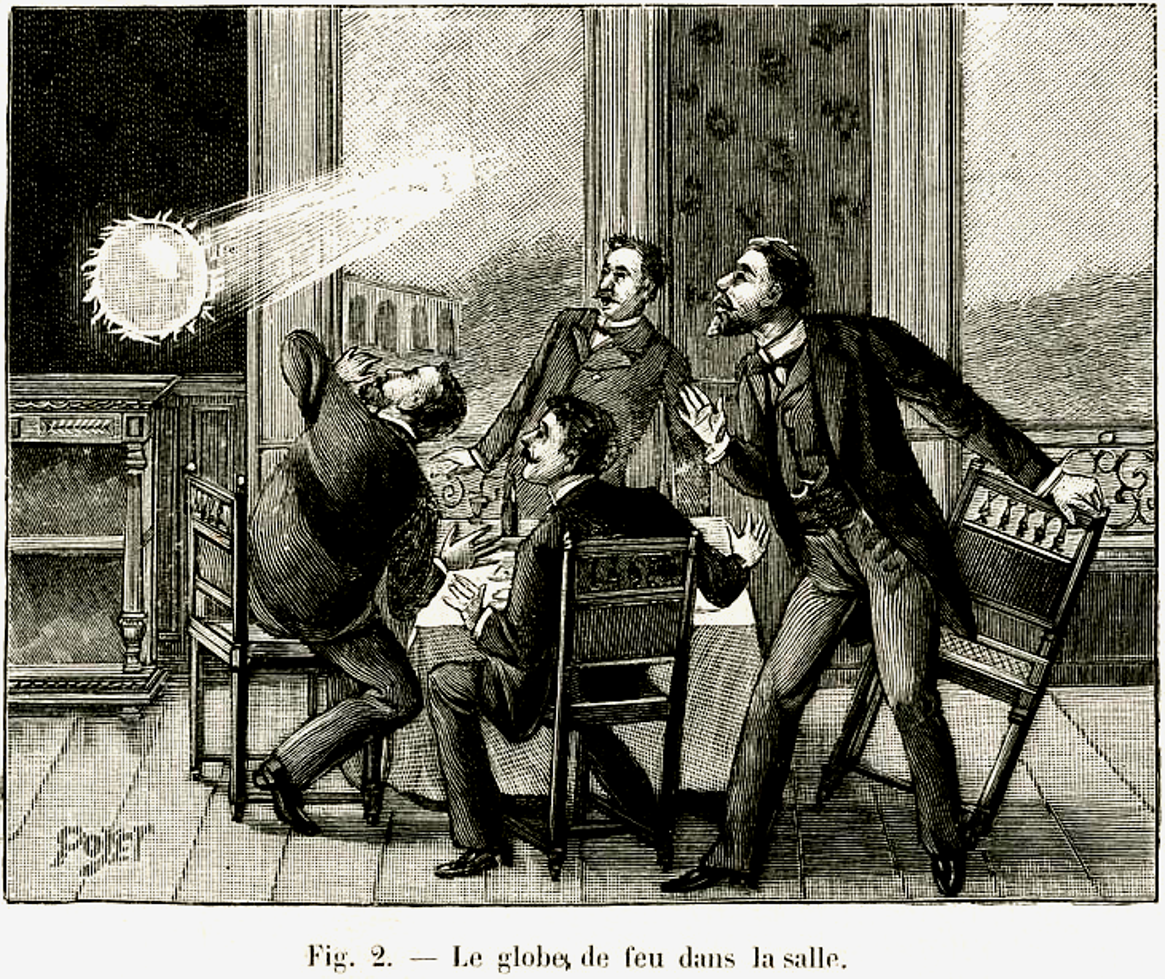
Scientific Unknowns: Ball Lighting

Ball lighting is something I have wanted to write about now for a long time. I was first introduced to ball lightning in elementary school as just another form of lightning that moved across the ground. I never really questioned it until more recently, when I started to hear more about it. Ball lightning seems to be something that many people report seeing, but there is little in the way of physical evidence. Its a phenomena that lots of people accept without really knowing what it is, just as I did. So I decided to do some investigation on the subject.

My first questions in researching this were 'what is ball lightning?' and 'does it exist?' To my surprise, finding answers these two questions was no simple task. The is a compilation of anecdotal stories of ball lightning on the Internet. As I read these, one thing became very clear: "ball lightning" is not one thing. The stories vary wildly for each person. Some of the stories are clearly astronomical objects like Venus and bright meteors. Other stories sound like they could have other plausible ordinary explanations as well. If we dismiss these stories, we are still left with some interesting accounts.

Of those accounts I couldn't immediately explain, there were few common threads. Some people saw a blue orb and others saw a red or orange orb. Many of the stories did take place during a lightning storm or there was some other source of electricity in the immediate area. Some people saw it hovering above the ground, others near the celling, and other reports say it was following a fence or wall. Sometimes it just disappeared peacefully and other times it crashed into objects and people, causing varying amounts of damage. Some common factors in all these stories seem to be that "ball lightning" is roughly a sphere in shape and it doesn't appear to have direct contact with object without disappearing. One thing that bothers me about these reports is that the vast majority of them are based on people's memories from usually over 10 or 20 years ago.

So what do I make of these reports? It's hard for me to say there's nothing at all going on here, but if there is, it is a very rare effect. Even if ball lightning does exist, it is very overblown. Our memories as humans degrade over time, so I am very wary of these older reports. Some reports were even second or third hand. The worst of them just assumed ball lightning as the cause of some electrical explosion. So I wasn't convinced ball lightning exists, but next I wanted to see if there was any plausible explanation to explain some of these stories.

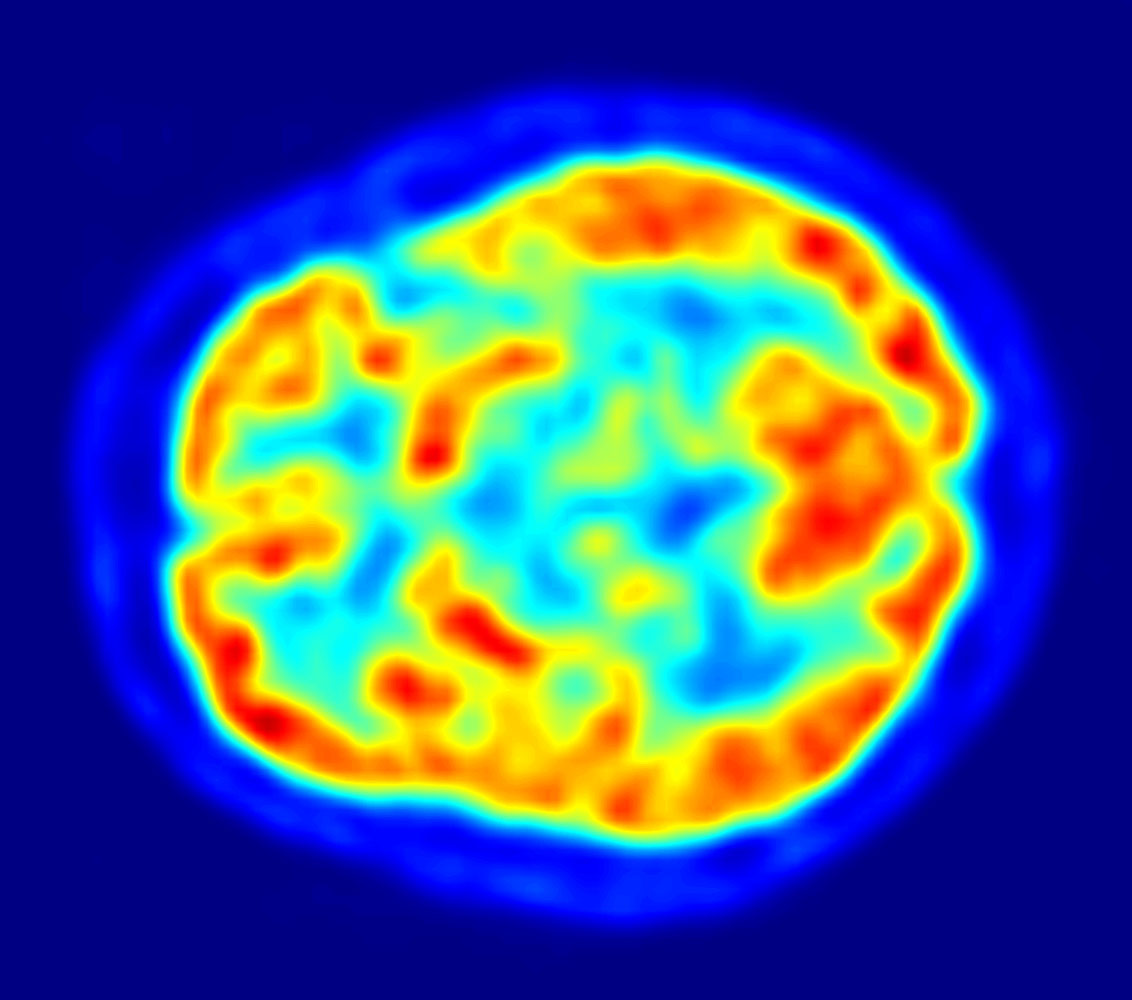
There are some interesting explanations for how ball lightning might form. Explanations vary, but all of them tend to be really technical. Some involve complex ways of refracting light and others purpose floating balls of plasma. Another idea is that nano-particles kicked up by normal lightning strikes can hover and burn for a few seconds after a strike. None of the hypothesizes I found explain the diversity of ball lightning experiences. A new idea even suggested that ball lightning is a hallucination caused by electromagnetic fields interacting with the brain. I think that this is one of the main reasons none of them have become well accepted by the scientific community.

So what's the final word on ball lighting? Personally, I'm not convinced that ball lightning is a actual phenomena. Before we start a serious investigation of anything, we need to make sure there's something to investigate. Some cool science has been done on the subject, but not enough to prove anything conclusively. I attribute ball lightning to mistaken sightings of astronomical objects, known but rare atmospheric phenomena, old distorted memories, and hallucinations. Culture gives all this the name ball lightning.

February 4, 2010

A New Idea on the Origin of Life

We don't know how life first appeared on Planet Earth. It is perhaps the biggest scientific unknown. If we knew how life developed, then we could a) find it more easily and b) create simple bacterium ourselves, allowing us to really watch the early evolution of life. Unfortunately, there is pretty much no record of the very first life forms, as there are few, if any, rocks around from 4+ billion years ago. There are still many theories as to the origin of life, however, including a brand new one.

The most commonly accepted hypothesis of how life first came into being is a "primordial soup." In early tide pools and muddy puddles, there would have been amino acids floating about. These are the building blocks of proteins, which in turn are the building block that make life possible. We have found asteroids with amino acids on them, so a "soup" of them on early Earth is certainly not out of the question. These amino acids could have just bumped around, randomly sticking to each other as sunlight beamed down, gradually building into simple, prokaryotic bacteria. Others have suggested that lightning could spark amino acids into life. In fact, most ideas on how life first appeared are variations on this "primordial soup" concept.

New research, however, suggests that there just isn't enough energy to explain how life began in such a soup. Instead, they propose that deep sea vents were where life first showed up. The team found an interesting composition of chemicals on some of these vents: a membrane, with a gradient of protons. This is basically the same mechanism that organic cells use, in a process known as "chemiosmosis." Every organism, from the simplest bacterium to an oak tree to us, uses chemiosmosis. Therefore, the team suggests that it was a feature present in the first common ancestor, from which everything else developed, and which it first learned at the geothermal vents at the bottom of the sea. It's an interesting idea, and one that makes a lot of logical sense. Perhaps, with more research along these lines, we can finally find the answer to how life began.

Source: Science Daily-New research rejects 80-year theory of 'primordial soup' as the origin of life

January 26, 2010

Weird Hills on the Surface of Titan


Titan is one of the one of the most exciting places in our solar system. This moon of Saturn has liquid methane playing the role of water on its surface, and water ice playing the role of solid rock. We are just beginning to understand the dynamics at work on this moon, in part because it is shrouded in a thick methane atmosphere. This image was taken on December 28th, 2009 and is giving sicentists new puzzle to solve.

The lines you see in the lower left of the image are rifts similar to features called corona on Venus. On Venus, we think they are caused by heat within the planet that puts stress on the rock. Straight features like this could also be created by surface activity like wind or rainfall.

The star-shaped feature to the right also points to some sort of activity happening in this area. “This star-shaped pattern of the hills indicates something significant happening in the middle of the star,” said Steve Wall of NASA’s Jet Propulsion Laboratory, Pasadena, Calif., a Cassini scientist on the radar team. “It might be caused by tectonic forces, such as the forces that pull the crust of a planet apart, or rainfall that leads to erosion, or an ice intrusion like a dike.”

Scientists don't have any answers yet, but either answer would be exciting. If this was caused by rain, it gives us a better understanding of how liquid methane shapes the surface of Titan. If on the other hand it is caused by some sort of internal heat, it raises all new questions on what the inside of Titan is like. We will just have to wait as Cassini continues to unveil this exciting world.

Image Credit: NASA/JPL

January 19, 2010

Scientific Unknowns: The Mind-Brain Dualism

Of the many interesting questions presented by psychology, the idea of the brain vs. the mind has some of the greatest impacts. The idea's been around for a long time: both Sigmund Freud and Emil Kraepelin proposed a difference between the mind and the brain, along with ways to study it. Even before that, Greek philosophers pointed out the problem of the relationship between the mind and the body.


The dualism basically states that, while the brain and the mind are clearly connected, the two are separate entities. The brain is easy to define. It is the physical bundle of neurons inside a person's head. It is capable of sending chemical signals to the rest of the body, allowing for movement and other functions. Even the simplest animals have some sort of brain. The mind, however, is not as easily explained. It is usually conceptualized as the consciousness, the "I" of a person. It is not something present, as far as we know, in any other species. There appears to be a connection between the two: for instance, if a person sustains brain damage from a disease or an injury, their mind also changes. They may have a different personality, lose memory, experience different emotions. But, research has not yet show exactly how the two are connected.

The impacts of this question are huge, however. It is a scientific, religious, philosophical, and practical question. It leads to questions such as these: If the mind/consciousness/soul is separate from the physical brain, then can it persist after death? If it is not separate, then is there even such a thing as a soul? Among the scientific community, there isn't really a consensus. According to a study by the University of Edinburgh and the University of Liege, over 1/3 of medical professionals regarded the mind and brain as separate entities. Despite this, however, in the same study a majority thought the mind and brain were not separable. Thus, there are really only questions at this point, rather than answers.

As David Tresan puts it, "In light of the prevailing scientific bias toward reductionism, how then are we to think about the relationship between mind and brain without on one hand simply reducing the former to the latter or without on the other invoking dualism and thereby abandoning altogether the quest for any such relationship?" In other words, how can we think about the mind and the brain as separate, yet connected? Only further advances in neuroscience and psychology will tell.

Sources: Mind-Body Problem: New Approaches
Articles below found through PubMed
"150 years of Freud-Kraepelin Dualism", Katharina Trede
"Dualism Persists in the Science of Mind", Athena Demertzi et al.
"Jungian metaphychology and neurobiological theory", David I. Tresan (full article found through EBSCO)

September 5, 2009

Google and Unexplained Phenomena

Today, September 5th, Google put up a doodle on its homepage. This isn't particularly unusual, as Google puts up a doodle for most holidays, birthdays of important people, or other major event. But, today's doodle doesn't seem to have anything to do with an event. Instead, it simply shows an alien spacecraft stealing one of the Os. If you click it, it takes you to a search on unexplained phenomenon.

The September 5th Google Doodle

As to why this is the doodle for today, I have no idea. But there are lots of interesting, unexplained phenomena out there. And, along with all of these, are paranormal and pseudoscientific explanations. One of the top search results, from LiveScience, lists 10 of the top phenomena that science has yet to explain.
  • The connection between the between body and mind: this includes things like the placebo effect. Medical science is just uncovering some of these complex connections, but specific answers haven't been reached yet.
  • Psychic powers: There is no scientific evidence that psychic powers or ESP actually exist. It cannot be proved in controlled, experimental conditions. However, the idea of psychics is highly popular, for whatever reason. So, it is also considered an unexplained phenomenon, even though its very existence is unlikely.
  • Near-death experience and the afterlife: Individuals who have had near-death experiences often report some "light at the end of a tunnel" experience. This may suggest a mystic afterlife. However, this is impossible to prove scientifically. There is no way to die, conduct research on the afterlife, and then return to publish a scientific paper on it. Many skeptics suggest that this experience of the "other side" is simply hallucination caused by brain trauma.
  • UFOs: Technically, a UFO is simply an unidentified flying object. Typically, these get attributed to alien spacecraft. Further investigation normally reveals them to be much more mundane things: meteors, military aircraft, a thrown hubcap, etc. There are some objects that simply can't be identified, though. The probability that these are aliens visiting planet Earth, however, is extremely slim, as the universe is a gigantic place. (Carver has discussed the idea of UFO's before, here.)
  • Deja vu: This is that sneaking feeling that you've already done something before. For instance, you might be walking down the street in a state you've never been, and feel like it's very familiar, and that you've been there before, despite the fact that that's impossible. There are scientific explanations, suggesting why deja vu might be triggered. Psychology still hasn't shown why exactly it occurs, or the nature of these "memories" yet, though. It's still unexplained.
  • Ghosts: Shows such as "Ghost Hunters" on SyFy suggest the existence of spirits of the deceased. However, there isn't any scientific evidence proving the existence of these either. There are many individuals who consider themselves "ghost investigators," and try to definitively prove that ghosts are there. But, as I mentioned above in regards to the afterlife, there is no person who has died, come back to life, and published a scientific paper on the nature of death and beyond. So, ghosts are also an unexplained phenomenon, which science does not support.
  • Mysterious disappearences: Unfortunately, people often vanish, whether because they ran away, were kidnapped, or had some sort of accident. Sometimes, police work and forensic science can help to find them, or at least determine what happened. Other times, people vanish without a trace, like Amelia Earhart or the crew of the Marie Celeste. When there is no evidence and no leads, not even the best forensic scientist can find them.
  • Intuition: Also known as instinct, a gut feeling, or a "sixth sense", intuition is easy to observe. What is more difficult to explain is why these gut feelings are often correct. Psychologist speculate that we subconsciously pick up information and cues, and then can consciously apply them to a situation. How exactly this works, though, is undetermined.
  • Mythical creatures: Bigfoot, the Loch Ness Monster, and other mythical creatures are also unexplained. The likelihood of their existence is small, and the evidence proving they exist is not there. (See It's Nessie on Google Earth!) However, science cannot definitively prove a negative. These creatures might exist. Until we have strong evidence, however, these creatures are just a myth.
  • Strange sights and sounds: There are certain locations that people claim to hear unusual sounds, hallucinate, or see unusual activity, such as Area 51 or Taos, New Mexico. The Taos Hum is a common one. Visitors claim to hear a buzz in the area, which is supposedly very annoying. However, many residents do not hear it, and neither do some visitors. The sound is probably natural or psychological; however, its source is indeterminate.
With nearly all of these phenomena, there is simply not enough evidence to draw solid conclusions. I'll try to go more in depth with each of these, and other unexplained phenomena, in the future. They pose interesting questions, and can be areas of research in the future.


Thanks to Google for the inspiration, even though no one really understands why this doodle is there.

August 27, 2009

Lightning's Twin

And here I thought normal lightning was cool.

As it turns out, lightning has a twin above the clouds. It's known as a gigantic jet. The name is pretty accurate, too; where normal lightning fits into a 6-inch channel and travels up to around 4.5 miles, gigantic jets have multiple channels and can travel as much as 40 miles, and enter the ionosphere (which is the boundary between the atmosphere and outer space).


Because of their location, and their short duration, there are only 5 photographs of these gigantic jets. One of the most recent of these was caught nearly on accident. Steven Cummer, of Duke University in North Carolina, had equipment set up to photograph sprites, another sort of electrical discharge in the upper atmosphere. Their equipment was in just the right place at the right time, to capture a 1 second image of a gigantic jet.

This new data will be very useful as scientists study these gigantic jets more closely. Right now, very little is known about them. Scientists have no idea what types of storms or conditions are necessary to produce a gigantic jet. Cummer is planning to set up a high-speed, low-light, color camera, to attempt to capture more images of this upward lightning. This will help determine chemical process, temperature, discharge patterns, and much more. For now, we have a couple cool pictures and videos, and hopefully more are on the way.

Credit: Science Daily- Lightning's Mirror Image... Only Much Bigger

August 19, 2009

Scientific Unknowns: What is Life?

Life is you, me, and every living thing on our planet, but defining it nearly impossible.  We study life here on Earth and look for it on distant worlds, so how can we not know what it is?  The real problem is we only have one example of life: our planet.

All life on Earth is based on the same things.  Carbon makes up the organic molecules; think of these as the Lego set of life.  DNA is the code that allows for replication and therefore evolution.  Water is the liquid that allows the organics to easily form long chains.  All of these things have come together to make life here on Earth.  What we don't know is if life could be based on other things, for example, liquid methane instead of liquid water.

Imagine that you had to define what a dog is, with only a St. Bernard as your example.  A St. Bernard has four legs, slobbers all over, is very resilient to the cold, has a long snout, and is usually very friendly.  By making a definition of all dogs by one breed, your definition becomes biased towards that breed.  Some things like having four legs will apply to all dogs, but when you try to pin down specific attributes your definition breaks down fast.

So, what parts of our definition of life apply across the board, and when are we being too specific?  We don't know.  This is maybe one of the most important questions in science, because it directly relates to how we look for other forms of life in the universe.  Could life be based on something other than carbon, maybe sulfur or silicon?  Is there a code other than DNA that life on a distant world has utilized?  The universe has always found ways of surprising us wherever we look.  I see no reason why the search for life would be any different.

August 6, 2009

Scientific Unknowns: Dark Energy

Last week, I talked about dark matter and how it is a placeholder name. Dark energy is essentially the same thing, only for a different problem.

When we look out at distant galaxies, we see something very surprising: they are all running away from us. At first glance, you may think that means that we are at the center of the universe. One thing you realize when you study science long enough is that this is a common first guess, but it has yet to ever be true. The reality is that all galaxies are running away from each other. This is because the universe is expanding.

Think of this like a balloon. Put just a little bit of air in the balloon and then draw dots all over the balloon with a marker. If you then continue to inflate the balloon the dots all move away from each other. From the perspective of any one dot it looks like all of the other dots are running away from it.

When scientists first discovered this expansion they expected that it would be slowing down due to gravity trying to pull everything together. What they found was that the expansion of the universe is speeding up. Dark energy is the place holdername for whatever it is that is speeding up this expansion.

Dark energy is literally one of the greatest mysteries in astronomy today. Some estimates say that it makes up 70% of our universe, yet we have no idea what it is. That is a big hole is our knowledge of the universe and I can't wait to see what fills it.

For more information on dark matter and dark energy you can check out NASA

July 29, 2009

Do you want to get involved in Real Science?

If so, this is your opportunity. A group called Citizen Sky is looking for volunteers to help them study a very interesting and bizarre star system. Regardless of where you live or your background knowledge, they want your help.

Just for a little background: Citizen Sky is studying a star called Epsilon Aurigae. Don't be scared off by the name, because this is a really interesting star system. Just as planets orbit a star, stars can also orbit stars. These are called binary star systems. When one of the stars passes in front of the other, we get an eclipse. When this happens, we see the brightness of the total star system dim. In the case of Epsilon Aurigae we see an eclipse about once 27 years. The really weird thing is that when scientists looked at the spectrum they could only see the light from one star. Since this was discovered, the question has been what is eclipsing this star.

This is where Citizen Sky needs your help. The next eclipse is predicted to start this August. They are looking for people to help them with everything from making the observations (which you don't need any special equipment for) to studying the data and doing outreach. Citizen Sky will give you all of the skills you need to help them out, so no background knowledge or experience is necessary. Projects like this is a great way to really understand the process, and sheer joy of science.

For more information I recommend the July 7 episode of the 365 Days of Astronomy
To get involved go to www.citizensky.org

July 28, 2009

Scientific Unknowns: Dark Matter (Yes, it Really Exists)

When I teach astronomy, one of the most common questions I hear is "Is dark matter real?" In order to answer this question let me give an example.

Let's say that you are riding your bike and suddenly you start to hear a grinding sound. You start to slow down and the sound goes away. Let's call this Dark Sound. What you could do is try to describe the sound. If you have a speedometer on your bike, you may be able to say that it only happens when you are going faster than 10 miles per hour. You might try changing gears and find that it only happens when you are on your second rear gear. By doing this you can describe the problem, but you may still not know what the problem is. Dark Sound is a place holder name until you take it to a mechanic and they can tell you what's wrong.

Dark matter (and dark energy which I will talk about later) is a place holder name. The problem is with galaxies. When we look at a galaxy we can estimate how much stuff there is in that galaxy. We can then figure out how much gravity that stuff should have. The problem is that there is five times more matter in galaxies than we can see. It is estimated that over 90% of the matter in the universe is dark matter.   Scientists are getting closer and closer to understanding what this dark stuff is, but the answer still isn't there. We have imaged the effects of dark matter on small galaxies, and now understand there to be halos of dark matter around large galaxies. Right now, many of the world's leading astronomers and cosmologists are trying to figure out what this dark stuff is; when they do I'm sure that the answer will change how we see the universe.

For more I recommend Astronomy Cast

July 22, 2009

Scientific Unknowns: Mars' Methane Leak

In January of this year, researchers using two telescopes at Mauna Kea in Hawaii found large amounts of methane in Mar's atmosphere. Their findings showed that the methane varied on location and time of year. For scientists, this discovery is really exciting. "Methane is quickly destroyed in the Martian atmosphere in a variety of ways, so our discovery of substantial plumes of methane in the northern hemisphere of Mars in 2003 indicates some ongoing process is releasing the gas," said Dr. Michael Mumma of NASA's Goddard Space Flight Center in Greenbelt, Md. "At northern mid-summer, methane is released at a rate comparable to that of the massive hydrocarbon seep at Coal Oil Point in Santa Barbara, Calif."

Since methane doesn't just hang out in Mars' atmosphere, where is it coming from? So far there are two main ideas. The first is that there is some geologic process under the surface that is producing methane. If this is true, then Mars is not as geologically dead as we thought. The other possibility got a lot more press when the story was released. This is the idea that microbial life under the surface is expelling this methane as part of its metabolism.

As exciting as the possibility of life on Mars is, we can't jump to conclusions. The reality is that we know the methane is there, not what is producing it. Regardless of what the answer is, it will be extremely exciting for planetary scientists.

For a more in depth look I recommend Phil Plait's review at Bad Astronomy

Image Credit -NASA

July 19, 2009

Did Jupiter Just Get Hit?

Amateur astronomers play a important role in astronomy. Professionals just can't be watching all of the cool stuff out there, all the time. This recent photo, which has been spreading like wildfire across the Internet, was taken by an amateur astronomer in Australia. There is a lot of speculation that the dark spot at the top could be the aftermath of a large impact. You can see the resemblance to the Shoemaker-Levy 9 impact from 1994 (picture below).

There is still the possibility that is just a weather phenomena. Jupiter's clouds are very dynamic and something like this would not be that surprising. I wish the skies here were clear so I go out with my telescope and see it. If you have a telescope go out and give it a shot. Hopefully over the next few days. and more observations, we will find out what this is. This is science in action, making observations and trying to figure out what's going on.
You can see a larger image here. Times when it will be visible can be seen here.

July 14, 2009

Scientific Unknowns: Venus's Superwind

Venus is a amazing place. With temperatures on the surface that can reach nearly 900 degrees fahrenheit and clouds of sulfuric acid, Venus is not the best vacation spot in the solar system. Like every planet in our solar system, Venus also has its fair share of mystery.

If you comb the Internet for information on Venus, most sites will tell you that the average wind speeds for Venus's top layer of clouds are 300-400 kilometers per hour (about 180-250 miles per hour). The jet-stream on the earth travels at only about 225 kilometers per hour (140 miles per hour). Keep in mind that the Earth is also spinning much faster then Venus. The Earth spins once on its axis every 23.9 hours; Venus takes 5832.5 hours (about 243 days). This super-rotation of Venus's atmosphere is still not understood.
I am currently working with a group of scientists trying to better understand these winds. The really cool thing about all of these unknowns is that there are scientists working on understanding them. Finding out what drives Venus's atmosphere will probably give us a much better understanding of our own atmosphere as well.
Image credit- NASA

July 7, 2009

Scientific Unknowns: Mercury's Black Eye

Mercury is a dead world. It has no notable atmosphere, no plate tectonics, and no volcanism. The only thing that reshapes Mercury's surface now are impacters, crashing into the surface and leaving craters in their wake. Yesterday, on NASA's Astronomy Photo of the Day website, they had a picture of one of these craters. In this picture you can see a dark substance at the bottom of the crater.

The first thing we need to rule out is it being a shadow. Notice that there are no noticeable shadows in any of the other craters. That's because the sun is at zenith. This means if you were standing on Mercury the sun is right overhead. This rules out the shadow theory.

If you are familiar with geology, you know that there are lots of different kinds of rocks and metals that are a dark black. The question is which one is it, and where did it come from.
It could be that whatever hit Mercury was made of this weird material. It could also be that
when the surface was impacted material from under the surface was exposed. Other dark rocks have also been discovered by the Messenger spacecraft. One of these is this ring of black
material. The first picture is interesting because it is the darkest. One of Messenger's science goals is discover what this black stuff is. Go Messenger!

Source- APOD

June 29, 2009

Scientific Unknowns: Tilted Worlds

In the northern hemisphere, we are currently in the middle of summer. That's because the Earth's axis is tilted at 23.5 degrees. Right now, the northern hemisphere is pointed towards the sun. So, while right now I get to enjoy long days and warm weather, in six months the northern hemisphere will be pointed away from the sun and the snow will return. This is how seasons work (seasons are NOT caused by the Earth getting closer and farther from the sun). On other planets, this tilt is much more extreme.

Venus has the most intense tilt in the solar system. Venus is actually upside-down, compared to the other planets. The thinking is that Venus got flipped the same way the Earth got its tilt. In the young solar system, when there were lots of little planets wandering around, collisions were common. It was one of these collisions with a Mars-sized planet that gave the Earth its tilt. The debris from that collision created our moon. Venus probably got its extreme tilt from one or many of these collisions.

For the inner rocky words of our solar system, this collision model makes sense; the outer planets are another story. The outer planets are made mostly of gases like hydrogen, helium, and methane. Uranus's axis is tilted over 90 degrees. Yes, Uranus orbits the sun on its side! Even most of Uranus's moon's are orbiting in this weird plane. The problem: to tilt such a large planet, you need a lot of big planets to hit it. We just don't think that there were that many big planets hitting Uranus. Some other ideas are out there, but it is really hard to know what happened 4.5 billion years ago. Hopefully one day we will find new evidence that could lead to an answer, but for now this is another one of our solar systems mysterious features.

Sources- NASA