Causes


free debate


February 27, 2013

Arguing from Authority (and doing it well)

Skeptical websites and podcasts are always quick to point out when people make the informal logical fallacy of arguing from authority. I have done this myself when talking about the Cottingley Fairies. On those same websites, however, you will likely be able to find appeals to the scientific consensus or scientists who are experts in a given topic. When you break apart the argument, both of these are appeals to authority. So the question then becomes is there a difference, or are skeptics not following their own advice?

The argument from authority is considered one of the informal logical fallacies. An informal fallacy is roughly speaking one which occurs when someone is making a non-deductive argument. But enough with the logic class. Why is an argument from authority bad? I think when we really break things down it is not arguments from authority that are bad, but instead arguments from false authority. As a student, I recently had this difference driven home to me in two of my classes.

It is not uncommon for upper division science classes for professors to invoke basic principals or ideas from other scientific disciplines. I think this is particularly true in two fields as intimately related as chemistry and astronomy. While this connection might not seem obvious at first, it is a deep connection and may be the topic of another post. This brings me to my introductory astrophysics course this last fall. We were deriving basic equations to describe the interior of stars and as a starting point we took the ideal gas law. I asked my professor under what circumstances the ideal gas law was valid and they replied by saying it is valid so long as the substance in question is a gas. If you do some research you can find that this is not quite true. For example under high pressures you need to use a more complex equation of state such as the van der Waals equation. Analogously, my chemistry professor at the start of the semester, when discussing the diversity between the planets, claimed that the Moon and Mercury both don't have days. This would mean that they both would have a light side and a dark side. "The dark side of the moon" is certainly a great rock album, but it is also one of the more common myths in astronomy. In reality the Moon as a diurnal period of about 30 days and Mercury's is about 178 days.

So what can we conclude from this? Should we simply say that my professors are bad authorities on which to base knowledge? I don't think this is the case. Instead I think that we need to take the more nuanced position and say that no one, no matter how educated, is an authority in everything. My astronomy professors are strong authorities in their sub-fields of astronomy but beyond that, they likely only have the knowledge of an informed non-expert. If we really want to understand something, we should look to the people who have devoted their life to studying that particular thing or better yet, try to find a general consensus of the scientists who work in that discipline. For as much as we would like to, I don't think we can ever truly escape arguing from authority. So instead of trying to avoid the matter altogether, let's use it as a tool to expand our own knowledge and teach those around us.

April 12, 2012

Adventures into Creationism: Russ Miller

As a college student, I spend most of my time doing math, physics, and more math. Every once and while, I am able to break free from the daily routine. Recently, when I did, what did I find but that a creationist, Russ Miller, was speaking on campus. I am huge promoter of hearing all sides of a debate, so I felt obliged to go. I went with a group of people who all are large supporters of science and reason, though I'm not sure we truly knew what we were getting ourselves into.

The talk started off with a local pastor introducing Mr. Miller and asking everyone to have an open mind. Not a bad start. Then Miller stepped up to the podium. He started by explaining how both creationism and "Darwinism" are both religious beliefs. In fact, from what I understood, by Mr. Miller's definition of a religious belief it is impossible not to have a religious belief. Of course, using such a broad definition fails to acknowledge that religious beliefs are not formed in the same way as scientific views. Religious views are centered on faith, while science works on constantly adjusting its views to fit the evidence at hand. To call them equivalent forms of knowledge does both a disservice.

What followed after that, I can really only describe as a maelstrom of bad evidence, bad arguments, and attacks on science. It would be impossible to recount every point he made and why it's wrong, so here are some highlights. He stated that fault lines are where the water shot out of the Earth at the start of Noah's flood. As if to try and top that, it was during this flood that all of the layers of strata that form such iconic beds as the Grand Canyon were laid down, all fossils formed, and all those sediments hardened into sandstone. After all this sandstone was formed, the Grand Canyon was cut out as the flood waters receded.

Next up was carbon 14 (C14). Carbon 14 is an unstable isotope of carbon with a half life that is about 5,730 years. C14 is used by scientists to date organic materials between about 11,000 and 50,000 years old. Russ postulated that after millions of years we should not expect any detectable amount of carbon 14 left in any samples we take and I think this is a good rule of thumb. Of course, nature is always a little more subtle and complex. The two main examples Mr. Miller used were carbon 14 in coal beds and in diamonds. As it turns out we do find noticeable amounts of C14 in some coal beds, particularly ones near large amounts of radioactive rocks. The reason these beds still have C14 in them is that as the surrounding rock decays the coal is bombarded by radiation producing the mysterious C14. For diamonds, the answer is actually is a little simpler. Usually only organic materials are tested for C14, so to even do this test they likely had to use higher temperatures to get the diamond to combust. Higher temperatures increases the amount of C14 you create just by testing a sample, in essence contaminating your result.

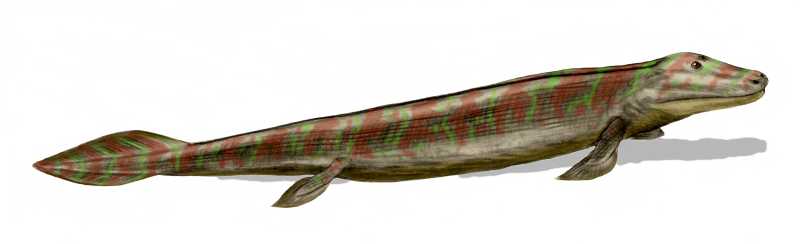
So after having bad philosophical arguments and using bad evidence to support his view of creation the next step was to attack legitimate science. His main focus was paleontology as it provides us with some of the most direct evidence of evolution. He explained how Piltdown man and Nebraska man were both hoaxes, a true statement. The problem is that he then didn't even pause to look at the myriad of hominid specimens that are not hoaxes. In an attempt to show how no species has ever evolved, he also made the claim that the famous (and awesome) transitional fossil Tiktaalik is really just a coelacanth. Personally I think the images of the two species are enough to show how ridiculous this is.
Tiktaalik
Image Credit: Nobu Tamura via Wikipedia
 Coelacanth
Image credit: Ballista via Wikipedia


To conclude his talk Mr. Miller simply reiterated his main points and walked off. There was no questions, no chance for clarification, or for dissenting opinions to be heard. This act alone I think encapsulated perfectly what Russ Miller was all about. He is not interested in engaging in a quest for the truth because he already has it. He wants to tell you what he thinks and if you disagree, well then he knows where you will go when you die. He uses the science when it is convenient and ignores it when its not.

Admitting you might be wrong is humility. Looking at the evidence that doesn't support your ideas is intellectual honestly. Taking questions after a talk is a sign of respect for your audience. Russ Miller's actions speak for themselves.

March 26, 2012

Rocks on Mars

Garden of the Gods
We know a lot about rocks, and the ways they react to wind, water, sunlight, heat, and other factors. Geologists can look at a strange rock formation, such as Colorado's Garden of the Gods, at tell you exactly what happened to create these odd structures. However, as with all science, there's always more to discover. The newest discovery is of a completely new kind of landform... on Mars.

This new kind of structure is called a periodic bedrock ridge. This sounds quite technical, but in reality, that is exactly what the structures look like: ridges in the bedrock at a regular (or periodic) distance from each other. In fact, it looks quite similar to sand dunes, at a first look. However, instead of being grains of sand blown into piles by the wind, they are tracks eroded by the wind into the bedrock. 

Periodic Bedrock Ridges
From Science Daily
David Montgomery, of the University of Washington, suggested that these features formed because the rock has bands of softer material within it, and that the erosion is of an unusual sort, that works perpendicular to the wind direction. The hypothesis is that the high speed winds on Mars are thrown into the air when they collide with a solid land formation, and that these periodic bedrock ridges form when the winds return to the surface. In order to visualize this, imagine driving a remote-control car. Jump it off a ramp, and onto a memory-foam type surface. The place where it impacts will have deeper tire tracks than anywhere else. That car is like the wind on Mars, and that impact point is where Montgomery and his team believe the ridges form.

This research is particularly interesting because there don't seem to be any analogs, to date, of this kind of feature on our own planet. On Earth, the presence of water means that very rarely will bedrock be eroded by wind alone. This difference means that we can understand not only Mars geology better, by utilizing these landforms to look at the beds in the Martian surface and figure out more about the geologic history of the planet, but also understand better how erosion works and parse out, here on Earth, the differences between different types of erosion, and the characteristics that separate one from another.

March 19, 2012

TED-Ed and Scientific Unknows

Sorry for the recent silence. This is a crazy semester for me but hopefully things will lighten up soon. Anyways, I was recently perusing the interwebs and was pointed to a new TED initiative by Ron Garan on Google+.

From the website, TED-Ed's goal is to
...Capture and amplify the voices of great educators around the world. We do this by pairing extraordinary educators with talented animators to produce a new library of curiosity-igniting videos. A new site, which will launch in early April 2012, will feature these new TED-Ed Originals as well as some powerful new learning tools.
I think this is a wonderful idea. TED has the connections to bring together great minds and create a wonderful product. I was going through the videos currently up and couldn't help but watch one focusing on unanswered questions. I highly recommend it as it mirrors some of my own thoughts on why these mysteries need to be shared. After all it's questions, not facts, that drive curiosity.


I am really excited to see what results this project produces. TED is currently looking for teachers and animators so if you think you would be a good fit, or know someone else who would be, put in their name. To close here is another TED-Ed video about the awesomeness of science by Mythbuster Adam Savage.


February 13, 2012

Basic Rocket Science

Rocket science may not be as hard as you think. Check out this video to learn about how rocket propulsion works:


h/t to Henry Reich on Google+

February 8, 2012

A (Cricket) Song Long Forgotten

Along with most soft tissue, color, and a host of other features of prehistoric life, the sounds those long-gone creatures made are lost through the depth of time. While we make inferences about the sounds made by Parasaurolophus, Tyrannosaurus rex, the earliest birds, and the other animals living at the time, those projections are just just guesses, based on an approximation of acoustic and air flow properties. If those creatures had vocal chords, or any soft-tissue mechanism for creating sound, then we today have no way of recreating those noises.

A singing modern cricket
From what-when-how
However, there are some animals that don't use soft tissue and complex skull structure to create sound. Modern crickets, katydids, and other insects in the Orthoptera order create sound by running a row of "teeth" on one wing across the other, similar to a violinist running a bow across the strings. These fine details, however, very rarely preserve in the fossil record. It was not until a very detailed specimen, from North China, was discovered that Dr Fernando Montealegre-Zapata and Professor Daniel Robert, experts in biomechanics, were able to determine how ancient crickets made noise, and what they would have sounded like. This 165 million-year-old cricket had similar stridulating organs (the mechanism used to make sound) to modern species, something that's never been seen before in a fossil. The team built a reconstruction of that structure, and compared it to many modern species, to determine what it sounded like. In fact, the fossil was so detailed that they could fully recreate the song of this species, named Archaboilus musicus. You can listen to it here.


Unless the laws of physics suddenly allow us to build a time machine to the past, we will never know exactly how the Jurassic landscape sounded. The discovery of A. musicus, and hopefully more insects like it, along with understanding the sounds made by amphibians, mammals, dinosaurs, and reptiles, based on what information we can glean from the fossils and what we know of modern creatures, will help us to slowly piece together a more dynamic landscape of the past, engaging not just the eyes, but the ears as well.

Source: Science Daily- Fossil cricket reveals Jurassic love song
Wired - 165-Million-Year-Old Cricket Song Comes Back to Life

February 6, 2012

The Extreme Tardigrade

Most extremophiles are bacteria, living in places like the deep-sea hydrothermal vents, sulfuric hot pools, oxygenless layers in the ocean, and other environments that are deadly to every other form of life. But there are a few extremophile animals, such as the tardigrade.

>
Impressed yet? These invertebrates are some of my favorite living animals, and are a fascinating study in how evolution works. We still barely understand extremophiles of this sort, and there's a lot more research to be done. If you are interested in learning more, there are some resources below the break.

January 25, 2012

Book Review: Fads & Fallacies in the Name of Science

Second Edition Published by
Dover Publications
If you have an interest in telling reality from nonsense, I have found history to be one of the most insightful guides. UFOs, Scientology, and end of the world theories did not show up yesterday. Each of these has a long chronicle of claims and critics. Understanding that history is a window into the world of frauds, cranks, and the misinformed.

Fads & Fallacies in the Name of Science was written by Martin Gardner in 1952, with the second edition coming out in 1957. I have heard this book referred to as one of the first modern skeptical books. The book covers a wide rage of topics each in about 10 pages. As I read, I was surprised at how many of these ideas are still around today, only repackaged for a modern audience.

Personally, the most informative and frankly fun cases to read about were the UFOs. You have to keep in mind this book was written before the launch of Sputnik, so our understanding of the universe was very different. This was a time when most UFO were believed not to have come from other stars or galaxies but from Mars or Venus. The dropping of the first atomic weapons was still fresh in the public consciousness as well. This led a whole slew of explanations for why the aliens were visiting the Earth. Some were fairly straightforward, like the idea that the aliens wanted us not to destroy ourselves. Other explanations were outright bizarre, like the idea that beings the size of bees made from precious gems were piloting these UFOs because the atomic blasts were somehow disrupting the sun and threatening their home on Mars.

It is fun to look at these old ideas and see how ridiculous they are. But they also give us a very important cautionary tale. After all, Martin Gardner was not writing on these ideas simply to make fun of them. He wrote on these topics because these are things people believed. 60 years later, you could write basically the same book on a new set of weird beliefs that have cropped up. We need to be careful on what grounds we accept what we are told and carry on this legacy of informing those around us.

January 20, 2012

Getting Students Invested

One of the hardest parts of teaching, especially in a K-12 classroom, is getting your students engaged. This is a huge issue because the difference between having a student engaged and having one just not care can be the difference between them asking thought-provoking questions or having them disrupting the rest of the class. In training, I was told to get students engaged you need to get them invested in their education. That is great advice but at the same time it can be really hard to implement. There are only so many ways to tell a student that their education is important before they start blocking you out. That is why I got really excited by a new paper published in Sage Open that came up with a new way to get students engaged: contracts.

I have seen teachers use contracts in the classroom before, but not like this. The basic idea is you show students the requirements for each letter grade at the start of the semester. Each assignment is pass fail and can be repeated a fixed number of times. So for example to get an A you needed to get above 80% on 4 exams, do 3 of 4 written assignments, and 3 of 4 activities. To get a B in the class you would need to get above 80% on 4 exams, do 2 of the 4 written assignments, and 3 of the 4 activities. The student gets complete control over what activities and written assignments to do but for whatever assignments they chose they need to show a very strong understanding of the material. The idea is to get students to set their own goal at the start of the semester and then focus on mastering the material throughout the semester, not just remembering a percentage of it.

I really like this idea for several reasons. Giving students more control makes them more responsible for their own learning. That alone can be really motivating for many students. I also like the idea of letting students retry assignments because it makes them look at their previous work critically and look for ways to improve on it. Lastly, I think it is really good for students to learn to set goals early with a clear idea of what they will need to do to achieve that goal.

As nice as it is that this kind of student contract caters to my philosophical notions about how we should teach students, the real question is, does it work? The answer appears to be a tentative yes. To test it researchers at Western Illinois University compared two freshman psychology classes. The teacher and content was the same in both courses but one is a traditional grading system and the other used this contract grading system. To quote the press release...
...at the end of the semester, the group of students who were graded contractually were three times more likely to earn an A grade, one third as likely to fail or withdraw from the course, perceived a higher degree of control over their grade, and consistently rated their own effort, their instructor, and the course overall more favorably.
It is important to note that is was a small study and it was done on the college level so it is hard to say how well it would apply to a K-12 environment. We also can't rule out effects like the teacher being biased towards the contract grading system or the result being a statistical fluke. Still I think it is a really interesting idea. One that deserves more studies at more educational levels.


The full paper is titled "Use of Contract Grading to Improve Grades Among College Freshmen in Introductory Psychology" by Dana F. Lindemann and Colin R. Harbke and can be found at http://sgo.sagepub.com/content/early/2011/12/22/2158244011434103

January 18, 2012

Dynamic Earth: Happy Birthday, Baby Island!

On Thursday, the first clear pictures of a new land mass were revealed. And here they are:
From Universe Today
This new deserted island is part of Zubair Island chain in the Red Sea. A large volcanic eruption in December pushed this new piece of land above the water's surface, and this is the first clear shot, free of clouds and volcanic ash plumes, of the island. Like most island chains, this one is a series of shield volcanoes, which form as the continental plate moves over a "hot spot" in the upper mantle. This new volcanic island, therefore, is most likely nowhere near done growing, however, so it will be a while before anyone visits this place. It's an awesome reminder, however, of how the surface of our planet continues to grow.

January 17, 2012

Scientific Unknowns: What is Life Redux

Image Credit: JFantasy via Wikimedia Commons
Almost three years ago now, I wrote a post about the difficulty of defining life. Now this has come back into the news and I thought I would add my two cents.

This all started when Edward Trifonov, a biologist at the University of Haifa Isreal, proposed a three word definition of life. To quote from the article by Carl Zimmer on Txchnologist...
Trifanov analyzed the linguistic structure of 150 definitions of life, grouping similar words into categories. He found that he could sum up what they all have in common in three words. Life, Trifonov declares, is simply self-reproduction with variations.
In his article, Zimmer does acknowledge that there is a considerable amount of criticism but he mostly focuses on what this definition might be missing, metabolism, information and so on. I was interested, though, when I read a critical piece by Sean Carroll asking if reproduction should even be a part of our definition. He says...
...the idea of reproduction looms large in many people’s definitions of life. But I don’t think it really belongs. If you built an organism from scratch, that was as complicated and organic and lifelike as any living thing currently walking this Earth, except that it had no reproductive capacity, it would be silly to exclude it from “life” just because it was non-reproducing. Even worse, I realized that I myself wouldn’t even qualify as alive under Trifonov’s definition, since I don’t have kids and don’t plan on having any.
3 Legged dog on the right
Photo Credit: Jon Hurd via Wikimedia Commons
It is a really interesting question. We could define dogs in part as having four legs, but does that mean if a dog loses one leg it is no longer a dog? If we created a cell in the lab that is identical to a natural cell in every way except it can't reproduce is it alive? To give another example, I think it is easy to imagine a robot that can copy itself but that we would still not want to call alive.  My personal thought, is that reproduction is a necessary component for any type of life that will survive for long stretches of time. That doesn't mean reproduction is what makes something alive.

So what is life? I certainly don't have an answer. Right now we have a sample size of one*. Until we find life somewhere else in the universe, I wouldn't expect any real agreement on this deceptively simple question.

*After all, every living thing we have found on the Earth shares a common ancestor.

January 15, 2012

Pardon Our Construction

Due to some issues with changing links and image hosting, we'd decided to redesign Scientifica. All through this weekend, we will be changing templates and making adjustments, so we apologize if you come on while the site is a mess. These changed should be complete by Monday the 16th, at which time we hope you'll explore the new layout. If you find anything broken or that looks off, or have any other comments or suggestions, send us an email through our Contact form, or in the comments below.

Thanks!

January 7, 2012

Welcome to the Future

From the SGU and Skeptical Robot
According to some, this year, 2012, is going to be the end of the world. For me, however, this year feels, once again, like a reminder that we live in the future. I am writing this post not on a desktop or laptop computer. Instead, I am on a device sold as a phone, but bearing more resemblance to a Star Trek type pocket communicator, with options to access an instantaneous world-wide network of information. I can communicate several collections of individuals with whom I can share photographs, pages of information and data, and even talk to in a nearly face-to-face manner. It can give me directions to anywhere I want from where ever I am at a given point in time. I can find almost any book I want to read at any time. It allows me to never miss a perfect photo again. I wouldn't be surprised to discover that it also makes food and does my laundry, if you install the correct app. And this smartphone edition came out several years ago. The new ones, and their sister technology the tablets, seem even more like something out of a science fiction book.

And more exciting technology than this is coming out all the time. Last year, Google put driverless cars on the road. The first prototype electric airplane were funded through the NASA Green Flight Challenge. No-focus camera technology was developed. And those are just a few of the innovations that may come into the public field as early as this year, and each of them could revolutionary to how we live our daily lives.

Technology, and the science that allows us to develop it, can be amazing. For all that it can be annoying at times, it can be valuable to step back and realize just how fantastic the items we take for granted really are. We live in a world where science fiction is coming true. No, we don't have flying cars or mammoths on jetpacks, yet, but the things our smartphones, our tablets, our computers, our cars, our GPSs, our televisions, and more, allow us to travel, communicate, and do work in ways I wouldn't have imagined even as a kid just over a decade ago. Welcome to the future, and get ready to see what we discover in 2012, and beyond.

December 14, 2011

Book Review: Poor Economics

This is our first book review here at Scientifica, but I think it is long overdue. I'm not sure how often we will be able to do these but it something that I have wanted to do for some time now. Hopefully you will find some books that interest you and if you have any recommendations, please put them in the comments.

Poor Economics is not one of your typical skeptical book. It doesn't talk about ghosts or people who think the Earth is hollow. Instead, it dives into poverty and the solutions that people offer to the poor. As someone who is a fan of critical thinking and has done a fair about of service work, this book was the best blend of the two I have ever seen.

Humanitarian efforts are almost always run by people who really want to make a difference in peoples lives. Unfortunately, sometimes people get so caught up in trying to help that they never ask if what they are doing is working. It is easy to just go off anecdotes to justify your work and to some degree that is OK to do. However when it comes to putting in place programs that are really going to try to make an impact on social problems and increase peoples standard of living we should demand evidence. These programs are not free and like any consumer we should want the most bang of our buck.

Poor Economics does a really impressive job of reviewing the mixed and often limited data around poverty. Do people use a bug net that was given to them for free? Is a lack of food what keeps people poor? Are the poor one loan away form being thriving business owners? These are hard questions that have complex answers. Even if you don't read the book I strongly recommend you peruse their website. There is a lot of good data there as well a some resources for teaching about poverty.

The Bottom Line: This book is excellent. It doesn't matter if you know nothing about poverty or if you are engrossed in these issues. This book tries gives the reader understanding of why the poor make the choices they do and what can be done to help improve their lives.

As an aside, it is the end of the year so if you are looking for good charities I recommend you look at GiveWell.org and Foundation Beyond Belief. Give Well reviews charities that address lots of difference social issues. Like the authors of Poor Economics, they review the evidence for a charities effectiveness and rank them accordingly. Foundation Beyond Belief organizes secularists to donate to charities on a variety of issues. If you are able, please give back to humanity this holiday season.

December 9, 2011

Why Intelligent Design Doesn't Belong in a Science Class

I try to stay away from politics for the most part on this blog, but when it threatens science education I can't stay silent. For readers in other countries, the U.S. is currently in the middle of the Republican party (GOP) primary elections to see who will run against current President Obama in 2012. Last Thursday, the Huffington post reported on GOP candidate Michele Bachmann's stance towards evolution and intelligent design. In the video linked to by the article she equates not teaching intelligent design with "censorship on the part of government". Michele Bachmann is by no means the only GOP candidate that supports the idea of teaching Intelligent Design in public schools.

This idea that our students need to learn both intelligent design and evolution in their science class is wrong for several reasons. The purpose of a science class, especially in a K-12 school, is to give students an understanding of the best science we have and (ideally) an idea of how science works. By itself, that is a ton of content. I have yet to meet a science teacher who actually thinks they have enough class time to fully teach all the material in their curriculum. To give you a feel for how much content there is: when I was working in a middle school in Chicago, we were given the school year to teach our sixth graders all of Earth sciences. That may sound like a ton of time but consider that Earth sciences includes: the motion of the planets, the seasons, the lunar phases, the different types of rocks, basic tectonics, earthquakes, how pressure systems impact weather, reading weather maps, what is climate, and global climate change. All this while trying to teach them how science works and give them some experience using lab materials. So as it stands many teachers don't have time to give students a good understands of the most fundamental topics. There simply isn't time for controversial or fringe science.

This brings me nicely to my second point. Intelligent design shouldn't be taught in public schools because it's not science. It makes no testable claims that could ever falsify it. I am also not aware of any scientist who has made a discovery that stemmed from their belief in intelligent design. Any paradigm which makes no testable predictions and does nothing to further our understanding of the universe really can't be called science in any meaning full way. If it's not science, then clearly it shouldn't be in taught in a science class.

If intelligent design isn't science then, what is it? Religion. The first amendment of the United States says "Congress shall make no law respecting an establishment of religion, or prohibiting the free exercise thereof". This is in place to protect government from religion, and religion from government. So if intelligent design is religion, it cannot be taught in public schools without violation of the constitution. In 2005, this very issue came up in Dover, Pennsylvania. The judge John E Jones III concluded the following in the official decision "We have concluded that... ID cannot uncouple itself from its creationist, and thus religious, antecedents." You have a right to teach religion, just do it in church.

I have no problem with intelligent design being a part of a comparative religions course. I also think it would be really cool if maybe some larger high schools were able to offer a course on evolution that discussed the specific claims made by intelligent design proponents. Students will make up their own mind on all issues and I don't think anyone wants to stop them from doing that. What I want is for them to understand what's science, what's not, and what the difference is. That way, they will be making up their mind in an informed way. Along the same lines, how important this issue is to how you vote is up to you. I certainly am not trying to say this is the only reason to support or distance yourself from a candidate. I just find it sad when the people who are asking us to let them run this country do not understand the facts behind such a widespread issue.

If you are now sightly depressed, want to learn more, or both I highly highly recommend this clip of Dr. Neil deGrasse Tyson from his interview with Sam Ogden of Skephick.

December 7, 2011

What is Science? - Skewed Views

"Evolution is just a theory."

As a paleontology student, I hear that argument a lot. There seems to be a common misunderstanding of the language of science. This video delves into the problems of arguing against science using emotion or by appealing to incomprehension.


If you found this interesting, we have written a whole series on what science is:

Hat tip to Steven G via Fraser Cain on Google+

December 5, 2011

Practical Science: Exercising to Sleep

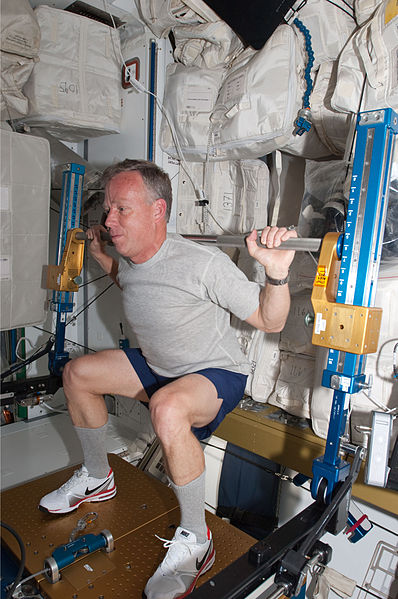
 NASA astronaut Steve Lindsey, commander of STS-133
exercising on the International Space Station
Photo credit NASA via Wikimedia Commons
I write a lot about science that overturns everyday notions. More often, though, I find science confirms what most anyone on the street could tell you. Even if those stories don't make as catchy headlines, they can still be really important. Case and point, a new study to be published in the December issue of the journal Mental Health and Physical Activity has found that people who do moderate to vigorous exercise for at least 150 minutes a week sleep better and feel less drowsy during the day. Not just a little more sleep either: a full 65% increase in reported sleep quality.

I have found this to be true in my own life as well. The nights I don't sleep well are when I am trapped inside all day writing a paper or watching videos on the Internet. My uncle is a rancher in Wyoming and says he has never has trouble sleeping. It is really nice to see a study like this to confirm my own anecdotal experience.

So, if you do have trouble getting through the night, try to find a half hour each day to ride a bike, run, swim, hike, lift, climb, whatever works for you.

December 1, 2011

Looking for Other Worlds

The search for exoplanets has gone from being an unlikely dream 20 years ago to being a booming area of research in astronomy and planetary science. The first true exoplanet discovery, according to NASA, was in 1994. Since then, 687 have been discovered, and more are being found all the time. This video from Cosmic Journeys takes you through some of the highlights of exoplanet discovery, particularly the search for Earth-like planets.

Hat tip to Ciro Villa on Google+

November 23, 2011

Child Scientists

For some, an interest in science shows up in college, or later. For others, it starts young. I was one of those very young science kids: if you mispronounced a dinosaur name around me, I would come right up to you and correct you. To this day, I still cringe whenever someone mispronounces Dienonychus* or Diplodocus**. As I've grown older, I've met lots of other kids who are excited about paleontology, like these two:


I love encouraging this type of interest in science in general, and paleontology in particular. Sometimes, though, I meet a kid who just completely blows me away with how passionate and excited they are. Thanks to the Internet, I've recently discovered several of these amazing kids. All of them are 7 or 8 years old, and how passionate and enthusiastic they already are about science blows me away.

 The first is Aaron, an 8 year old time traveler who, with his trusty computer pal INO, wanders through prehistory in search of his favorite dinosaurs and other creatures. He documents his travels in short podcasts, most of which focus on a particular dinosaur or other prehistoric animal. He takes time to share facts about each dinosaur as he tracks it, and to answer questions about paleontology, specific dinosaurs, and his own interests, sent in by other kids. His podcast story  is on its second season now, traveling through the Cenozoic instead of the Mesozoic. You can find him at Aaron's World.

Another is a vlogger, rather than a podcaster. Riley the Paleontologist is 7 years old, from Alabama. Much of the Southern U.S. could learn from him; he's clearly got the concept of "science" all figured out. He brings a miniature version of every dinosaur he discussed to his show, and discusses the basic facts paleontologists have found about each dinosaur. You can watch his first episode below, and find him on Youtube.


And the third "paleokid" I've discovered is Art, of Life Before the Dinosaurs. He is a blogger, and unusual in that, unlike many kids who love paleontology, his obsession isn't dinosaurs. Instead, he loves Paleozoic invertebrates, the weirder the better. This happens to be my favorite time period as well, and I learn something new with every one of Art's posts... which, considering this is what I'm studying in college right now, is quite impressive.

It's inspiring to find kids like these, taking initiative and, with their parents' help, sharing their love of science with the world. It gives me hope for the future of science. And these are just a couple of the paleokids. I am always finding other children and teens who, against the cultural norm, love science and spread that love to anyone willing to listen. If you know of any others, please send them my way!

Modified from my post at Teen Skepchick

Just in case you weren't sure how they were to be pronounced...
*die-NON-o-kus, not di-no-NI-kus
** dip-LOD-o-kus, not dip-lo-DOUGH-kus

November 11, 2011

New Comment Policy

We have had an increase in the comments we are getting. We are really excited by this and it made us realize we needed a clear comment policy. Hopefully it is mostly common sense, but you may want to take a look, here.

Happy Commenting.