Causes


free debate


Showing posts with label Evolution. Show all posts

April 12, 2012

Adventures into Creationism: Russ Miller

As a college student, I spend most of my time doing math, physics, and more math. Every once and while, I am able to break free from the daily routine. Recently, when I did, what did I find but that a creationist, Russ Miller, was speaking on campus. I am huge promoter of hearing all sides of a debate, so I felt obliged to go. I went with a group of people who all are large supporters of science and reason, though I'm not sure we truly knew what we were getting ourselves into.

The talk started off with a local pastor introducing Mr. Miller and asking everyone to have an open mind. Not a bad start. Then Miller stepped up to the podium. He started by explaining how both creationism and "Darwinism" are both religious beliefs. In fact, from what I understood, by Mr. Miller's definition of a religious belief it is impossible not to have a religious belief. Of course, using such a broad definition fails to acknowledge that religious beliefs are not formed in the same way as scientific views. Religious views are centered on faith, while science works on constantly adjusting its views to fit the evidence at hand. To call them equivalent forms of knowledge does both a disservice.

What followed after that, I can really only describe as a maelstrom of bad evidence, bad arguments, and attacks on science. It would be impossible to recount every point he made and why it's wrong, so here are some highlights. He stated that fault lines are where the water shot out of the Earth at the start of Noah's flood. As if to try and top that, it was during this flood that all of the layers of strata that form such iconic beds as the Grand Canyon were laid down, all fossils formed, and all those sediments hardened into sandstone. After all this sandstone was formed, the Grand Canyon was cut out as the flood waters receded.

Next up was carbon 14 (C14). Carbon 14 is an unstable isotope of carbon with a half life that is about 5,730 years. C14 is used by scientists to date organic materials between about 11,000 and 50,000 years old. Russ postulated that after millions of years we should not expect any detectable amount of carbon 14 left in any samples we take and I think this is a good rule of thumb. Of course, nature is always a little more subtle and complex. The two main examples Mr. Miller used were carbon 14 in coal beds and in diamonds. As it turns out we do find noticeable amounts of C14 in some coal beds, particularly ones near large amounts of radioactive rocks. The reason these beds still have C14 in them is that as the surrounding rock decays the coal is bombarded by radiation producing the mysterious C14. For diamonds, the answer is actually is a little simpler. Usually only organic materials are tested for C14, so to even do this test they likely had to use higher temperatures to get the diamond to combust. Higher temperatures increases the amount of C14 you create just by testing a sample, in essence contaminating your result.

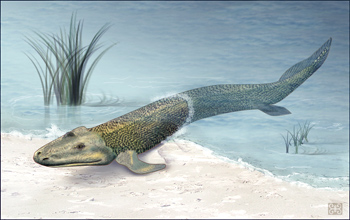
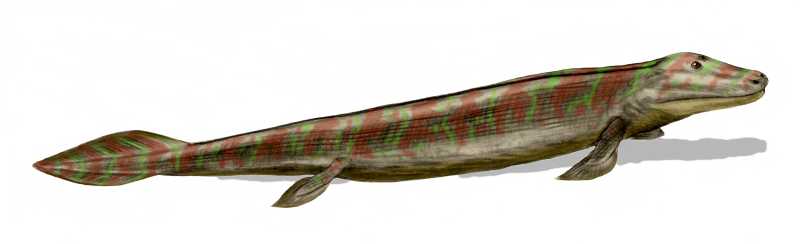
So after having bad philosophical arguments and using bad evidence to support his view of creation the next step was to attack legitimate science. His main focus was paleontology as it provides us with some of the most direct evidence of evolution. He explained how Piltdown man and Nebraska man were both hoaxes, a true statement. The problem is that he then didn't even pause to look at the myriad of hominid specimens that are not hoaxes. In an attempt to show how no species has ever evolved, he also made the claim that the famous (and awesome) transitional fossil Tiktaalik is really just a coelacanth. Personally I think the images of the two species are enough to show how ridiculous this is.
Tiktaalik
Image Credit: Nobu Tamura via Wikipedia
 Coelacanth
Image credit: Ballista via Wikipedia


To conclude his talk Mr. Miller simply reiterated his main points and walked off. There was no questions, no chance for clarification, or for dissenting opinions to be heard. This act alone I think encapsulated perfectly what Russ Miller was all about. He is not interested in engaging in a quest for the truth because he already has it. He wants to tell you what he thinks and if you disagree, well then he knows where you will go when you die. He uses the science when it is convenient and ignores it when its not.

Admitting you might be wrong is humility. Looking at the evidence that doesn't support your ideas is intellectual honestly. Taking questions after a talk is a sign of respect for your audience. Russ Miller's actions speak for themselves.

February 8, 2012

A (Cricket) Song Long Forgotten

Along with most soft tissue, color, and a host of other features of prehistoric life, the sounds those long-gone creatures made are lost through the depth of time. While we make inferences about the sounds made by Parasaurolophus, Tyrannosaurus rex, the earliest birds, and the other animals living at the time, those projections are just just guesses, based on an approximation of acoustic and air flow properties. If those creatures had vocal chords, or any soft-tissue mechanism for creating sound, then we today have no way of recreating those noises.

A singing modern cricket
From what-when-how
However, there are some animals that don't use soft tissue and complex skull structure to create sound. Modern crickets, katydids, and other insects in the Orthoptera order create sound by running a row of "teeth" on one wing across the other, similar to a violinist running a bow across the strings. These fine details, however, very rarely preserve in the fossil record. It was not until a very detailed specimen, from North China, was discovered that Dr Fernando Montealegre-Zapata and Professor Daniel Robert, experts in biomechanics, were able to determine how ancient crickets made noise, and what they would have sounded like. This 165 million-year-old cricket had similar stridulating organs (the mechanism used to make sound) to modern species, something that's never been seen before in a fossil. The team built a reconstruction of that structure, and compared it to many modern species, to determine what it sounded like. In fact, the fossil was so detailed that they could fully recreate the song of this species, named Archaboilus musicus. You can listen to it here.


Unless the laws of physics suddenly allow us to build a time machine to the past, we will never know exactly how the Jurassic landscape sounded. The discovery of A. musicus, and hopefully more insects like it, along with understanding the sounds made by amphibians, mammals, dinosaurs, and reptiles, based on what information we can glean from the fossils and what we know of modern creatures, will help us to slowly piece together a more dynamic landscape of the past, engaging not just the eyes, but the ears as well.

Source: Science Daily- Fossil cricket reveals Jurassic love song
Wired - 165-Million-Year-Old Cricket Song Comes Back to Life

February 6, 2012

The Extreme Tardigrade

Most extremophiles are bacteria, living in places like the deep-sea hydrothermal vents, sulfuric hot pools, oxygenless layers in the ocean, and other environments that are deadly to every other form of life. But there are a few extremophile animals, such as the tardigrade.

>
Impressed yet? These invertebrates are some of my favorite living animals, and are a fascinating study in how evolution works. We still barely understand extremophiles of this sort, and there's a lot more research to be done. If you are interested in learning more, there are some resources below the break.

December 9, 2011

Why Intelligent Design Doesn't Belong in a Science Class

I try to stay away from politics for the most part on this blog, but when it threatens science education I can't stay silent. For readers in other countries, the U.S. is currently in the middle of the Republican party (GOP) primary elections to see who will run against current President Obama in 2012. Last Thursday, the Huffington post reported on GOP candidate Michele Bachmann's stance towards evolution and intelligent design. In the video linked to by the article she equates not teaching intelligent design with "censorship on the part of government". Michele Bachmann is by no means the only GOP candidate that supports the idea of teaching Intelligent Design in public schools.

This idea that our students need to learn both intelligent design and evolution in their science class is wrong for several reasons. The purpose of a science class, especially in a K-12 school, is to give students an understanding of the best science we have and (ideally) an idea of how science works. By itself, that is a ton of content. I have yet to meet a science teacher who actually thinks they have enough class time to fully teach all the material in their curriculum. To give you a feel for how much content there is: when I was working in a middle school in Chicago, we were given the school year to teach our sixth graders all of Earth sciences. That may sound like a ton of time but consider that Earth sciences includes: the motion of the planets, the seasons, the lunar phases, the different types of rocks, basic tectonics, earthquakes, how pressure systems impact weather, reading weather maps, what is climate, and global climate change. All this while trying to teach them how science works and give them some experience using lab materials. So as it stands many teachers don't have time to give students a good understands of the most fundamental topics. There simply isn't time for controversial or fringe science.

This brings me nicely to my second point. Intelligent design shouldn't be taught in public schools because it's not science. It makes no testable claims that could ever falsify it. I am also not aware of any scientist who has made a discovery that stemmed from their belief in intelligent design. Any paradigm which makes no testable predictions and does nothing to further our understanding of the universe really can't be called science in any meaning full way. If it's not science, then clearly it shouldn't be in taught in a science class.

If intelligent design isn't science then, what is it? Religion. The first amendment of the United States says "Congress shall make no law respecting an establishment of religion, or prohibiting the free exercise thereof". This is in place to protect government from religion, and religion from government. So if intelligent design is religion, it cannot be taught in public schools without violation of the constitution. In 2005, this very issue came up in Dover, Pennsylvania. The judge John E Jones III concluded the following in the official decision "We have concluded that... ID cannot uncouple itself from its creationist, and thus religious, antecedents." You have a right to teach religion, just do it in church.

I have no problem with intelligent design being a part of a comparative religions course. I also think it would be really cool if maybe some larger high schools were able to offer a course on evolution that discussed the specific claims made by intelligent design proponents. Students will make up their own mind on all issues and I don't think anyone wants to stop them from doing that. What I want is for them to understand what's science, what's not, and what the difference is. That way, they will be making up their mind in an informed way. Along the same lines, how important this issue is to how you vote is up to you. I certainly am not trying to say this is the only reason to support or distance yourself from a candidate. I just find it sad when the people who are asking us to let them run this country do not understand the facts behind such a widespread issue.

If you are now sightly depressed, want to learn more, or both I highly highly recommend this clip of Dr. Neil deGrasse Tyson from his interview with Sam Ogden of Skephick.

June 13, 2011

Classifying Occlupanids

Biologists and paleontologists are tasked with a major challenge: looking that the diversity of life, and classifying it into groups based on morphology and genetics, in an attempt to determine what is related to what. While the details of this process, known as taxonomy, can be quite complex, it can theoretically be applied to anything. For instance, the little plastic things used to hold bread bags shut.

The purpose of the Holotypic Occlupanid Research Group is to classify occlupanids based on body shape, color, "teeth", markings, and several other characteristics. They have currently identified 6 main body plans, each of which constitutes an order on the Linnaean classification system, and have nearly 40 distinct species in the class "Occlupana".  They also keep track of mutations and mysteries, although none are currently displayed on the site. The "researchers" have also concluded that all occlupanids are parasitic, and are uniformly composed of a stiff, but flexible plastic.

The Occlupanid Collection:
The Occlupanid Collection
by Laser Burners, on Flickr
Now, this venture sounds quite silly: what's the point of classifying the bread bag thingies? In itself, probably not much. But it's a great introduction to how scientists classify real organisms. The class "Occlupana" is defined by several plesiomorphies, or ancestral characteristics: the parasitism, the plastic body, and the single "mouth". Orders, genera, and species are defined by synapomorphies, shared derived characteristics. For example, the species Pseudopalpis hayesi is defined by its green-blue color, its similarity to toxodentids (another order of occlupanid), and the fact it is only found on Thomas' English Muffins bags. This is similar to how a dinosaur fossil would be identified as a new species, although the list of characteristics studied would be much more complex.

I recommend taking some time to explore the website; it has details about how the occlupanids are discovered and classified, which serves as a great introduction to how real organisms are identified. They also have a call for contributions; if you want to explore the process of taxonomy in a hands-on, but fun way, this is a neat outlet to do so. This is a wonderful simplification of a very complex, important, and fascinating part of scientific research.

Cross-posted on Teen Skepchick

May 31, 2011

Reindeer See in Ultraviolet

Light is so much more than we can see. Human eyes have evolved over millions of years to be very sensitive to a very small sliver of all the different colors of light. Our eyes use those wavelengths of light that transmit well through our atmosphere and are most useful for finding food and predators. It is not surprising, though, that different animals that evolved in different environments than our own might have their eyes attuned to a slightly different set of colors than our own eyes. New research shows that reindeer may have just that ability.
"We discovered that reindeer can not only see ultraviolet light but they can also make sense of the image to find food and stay safe," said lead researcher Professor Glen Jeffery of the University College London (UCL). "Humans and almost all other mammals could never do this as our lenses just don't let UV through into the eye. In conditions where there is a lot of UV - when surrounded by snow, for example - it can be damaging to our eyes. In the process of blocking UV light from reaching the retina, our cornea and lens absorb its damaging energy and can be temporarily burned. The front of the eye becomes cloudy and so we call this snow blindness. Although this is normally reversible and plays a vital role to protect our sensitive retinas from potential damage, it is very painful."
Image Credit:Erik Christensen
Image shared via Creative Commons and Wikimedia Commons
So reindeer are not only seeing a part of the spectrum we are blind to, but one which is actually harmful to our eyes. It is also some wavelengths of ultraviolet light that will give you a sunburn. Still, these animals have adapted some mechanism for using this high energy light. Future research may lead to a better understanding of how their eyes are protected from this high energy light.

I have always wondered what it might be like to be able to see in some of those other parts of the spectrum. Reindeer are literally seeing the world in a way only accessible to us through the use of special ultraviolet cameras. This gives them an advantage in spotting predators and finding food in an environment that makes us nearly blind. Studying this could possibly give us in ways of protecting our own eyes form ultraviolet radiation or a myriad of other potential applications we can speculate on. It is impossible to know exactly what future technology this will bring about, if any. Still it is research like this, the research that surprises us and makes us think, that pushes science forward.

April 13, 2011

Religion and Politics in the Science Classroom

Ever since the Scope's Monkey Trials in 1925, there's been a political debate raging about the teaching of creationism and evolution in the science class. There's a lot of claims flying about: "Teach the Controversy", "Evolution is just a theory", "Intelligent Design is a science too!" Thus, so far this year, 7 different states have proposed bills that directly attack the teaching of evolution and other sciences.

As I mentioned before, this is hardly a new problem. Anti-evolution legislation is proposed every few years, and we've discussed it before. Every time, the National Center for Science Education presents its solid stance that evolution is a science and is fundamental in understanding biology; creationism, however, is not a science and has no place in the science classroom. Normally, this is enough to prevent the bill from being passed.

Man is But a WormThis year, however, there's more of a problem. In Tennessee, an anti-evolution (and anti-global warming) bill passed in the House of Representatives. It aims to let teachers "question" the sciences, and proposes they teach the alternatives. They fall into the trap I hear a lot, that "evolution is just a theory." This is not true in any sense. Evolution is a fact; we know for certain that animals change over time. We've watched it happen. The theory is Darwin's theory of evolution by natural selection, which was accepted by the scientific community over a century ago. There is zero controversy among the scientists; the "controversy" is only created by political and religious groups.

It's this made-up controversy that causes around 60% of high school biology teachers to be wishy-washy, at best, with the teaching of evolution. Many of these are not creationists themselves (although, unfortunately, some are). However, it's easier to play it safe and avoid the issue than deal with unhappy parents or school boards. Less than 30% of science teachers are willing to take the necessary strong stance that evolution is a scientific fact, and deserved to be taught as the central tenant of biology that it is.

I do think that religion can be taught in schools... in a comparative religions class. Single religions can even be taught... in private religious schools. But religious doctrine, based on texts written millennia ago, don't have any place in the empirical, ever-adapting realms of science and the science classroom. I find it very sad that, despite every rational argument that's been made for the teaching of evolution, despite a century of scientific acceptance, and despite the fact that intelligent design/creationism/creation science has been repeatedly proven to not be a science, there's still this yearly battle over such a central fact of how the world works.

February 25, 2011

Is Evolution Bad?

When someone tells me they do not believe in evolution, I like to ask why. Answers can range, but recently I heard one that interested me: that evolution is bad. I had heard evolution called many things, but bad? To be clear, the person I was talking to meant bad as in evil. They saw evolution as being the inspiration and justification for various historical atrocities. Although it caught me off guard, it is not an uncommon criticism to hear, and it deserves some time to discuss here.

The skeptical community's first response to arguments like this is often to point out the poor logic of it. Calling evolution bad is actually a great example of the appeal to consequences. The appeal to consequences is when an argument asserts that because of the consequence of an idea, it is therefore true or false. This line of reasoning falls apart once you realize that there are realities of the universe that are not good for society and our species in general. For example, the fact that atomic weapons can be used to kill millions human beings does not mean they therefore do not exist. Knowing whether or not something is good or evil does not tell you if it is a reality.

You can point out logical fallacies in disagreements all day long, but without the proper delivery they often come off as hollow. Before you point out a logical fallacy to someone, first agree that logic is a necessary tool for finding the truth. Don't take for granted that everyone always agrees with logic, as this is simply not true. If you are debating in front of an audience, it can be effective to point out fallacies if you do it right, but often just comes off as snobbish. Being able to recognize logical fallacies is a useful skill but presenting them to someone who disagrees with you is a whole separate issue. If you do want to point out the logic do so by analogy. I would simply say something to this effect:

It could be possible that woman are smarter than men (or visa-versa) and the discovery of that could have major social consequences. Some of those might be positive and others negative but neither would make the original fact more or less true. The consequence of something is not what makes it true.
Find the style and analogies you like, but hopefully the idea is clear.

Back to my main point: so, the social consequences of evolution don't change whether it's true. But does evolution have negative social impacts? This question of evolution and morality is one I am actually very interested in. It is a matter of historical fact that evolution has been used to justify atrocities. Eugenics, the forced sterilization of a group of people that share certain undesirable traits, is the most obvious example of this. The justification is typically that evolution favors the strong and so we can improve or evolve the human race but artificially selecting for those traits. So what scientific merit does this have, if any?

None. Let me walk through the problems with this justification. The first problem is a widespread misunderstanding of the theory of evolution. According to the theory of evolution there is no such thing as 'more evolved' or 'higher evolved'. Humans are no more evolved than a bacteria, although we are more complex. Evolution by natural selection pressures all species to develop traits advantageous to their environment. Different environments require different traits. After all, bacteria can survive in many more environments than we can. This brings me to the second flaw. The idea that evolution is all about the 'survival of the strongest' is another mistake. Flies are not very strong, yet they are pervasive across the planet. The same is true of many other animals. Finally, natural selection favors genetic diversity. Natural selection forces some traits to remain constant in a certain environment. Outside of that, it is generally advantageous to diversify. This way, if the environment changes, it is more likely that some members of the species will be able to survive. So in the end, any attempt to "improve" human beings in terms of evolution is both meaningless and doomed to fail.

So can any morality be derived from evolution good or bad? Like the Earth going around the Sun, evolution is a fact. Facts should be used to inform morality, but I leave it to philosophers to debate where morality is derived from. What I will say is that evolution, when properly understood, tells of a connection with each other and nature which I would call spiritual. The idea that we share a distant ancestor with every living thing on this planet gives a new appreciation for the beauty of the world around us. It in no way dispels our responsibility to help one another. It may be that it instead extends that responsibility beyond our own species. Again, let me be clear that this paragraph is more my own personal thoughts on the issue. This is by no means universally accepted or a direct outcome of evolution. That said, I am not the only person who feels this way.

February 18, 2011

Frog Teeth

(c) National Geographic
The natural world is filled with vestigal traits: whale hips, snake legs, wisdom teeth, etc. These are unnecessary features that disappear over time through natural selection. Because the features provide no advantage to survival or reproduction, and in some cases may have been a disadvantage, the traits are reduced over numerous generations, and will eventually vanish completely. By a principle known as Dollo's law, once a trait is lost completely, it cannot come back. It is just gone.

However, a new analysis of the frog species Gastrotheca guentheri suggests that, in some cases, lost traits can return. This species is the only one, of the over 6000 described species of frog, to have teeth on the lower and upper jaws. Most frogs only have tiny teeth on the upper jaw, if at all. In fact, based on genetic data, the frog lineage lost teeth over 200 million years ago. So, where did this species get them?

According to the study lead by John Weins of Stony Brook University, G. guentheri redeveloped complex lower teeth about 10 million years ago. It makes sense, with the animal's diet: the frog is carnivorous, and having teeth helps to catch prey. However, this is the only species to evolve this solution to the problem. Most other carnivorous frogs instead develop bony pegs on the lower jaw, rather than true teeth. The case of G. guentheri seems to be in violation of Dollo's law. One possibility that the paper suggested was that there could be a loophole. Most frogs do still develop upper teeth; this species could have just transposed that development onto the lower jaw as well. They would not have had to completely re-evolve true teeth. Still, though, this unusual adaptation is a bit of a mystery. This species is clearly off of the lineage that lost bottom teeth. There are far more common solutions than redeveloping true teeth. It's certainly an interesting evolutionary quirk, and provides new paths for more research into the mechanisms driving evolution.

Source- National Geographic: Frogs Evolve Teeth - Again
For more details, view the original publication.

February 12, 2011

Happy Darwin Day!

There have been a few ideas, through history, that completely revolutionize how we think about the world and jump start a long path of scientific inquiry: Copernicus' heliocentric model of the solar system and Newton's laws of motion and gravitation are two striking examples. These provide a fundamental base for modern astronomy and physics. 152 years ago, a book was published that presented a similar fundamental base for all of biology. This book was titled On the Origin of Species, and it was the first to present the idea of evolution by natural selection.  Every field remotely related to biology - ecology, genetics, paleontology, medicine, and more - provides evidence for and is influenced by this the fact of evolution. Today would be the 202nd birthday of its author, Charles Darwin. So, to honor the man and celebrate his idea, have a slice of Darwin cake and look around you at the incredible diversity of life on this planet.

There's a lot of opposition to evolution in the general public, which is an issue I deal with frequently and will likely discuss in more detail in the future. For now, though, I want to leave you with a sense of how beautiful and incredible our planet is, and how much more so considering every living thing we see came from a simple prokaryote 3.8 billion years ago.


If you're interested in reading Darwin's works, they are available as open source documents at Darwin Online.

Credit to Ben of the UChicago Secular Student Alliance for making the awesome Darwin cake.

September 8, 2010

A Summer Review and Return from Break

This summer has turned out to be extremely busy, so we've been on hiatus here at Scientifica. As school gets back into session, we'll get back onto a regular posting schedule. There's no summer break for science news, though, so here's a quick review of stories from this summer.

  • Viruses Harnessed to Split Water: A neat application of solar energy, which uses viruses as the means to split water using sunlight. The hydrogren produced can be stored, and used as a clean energy source later on.
  • Earth Fossil Find May Lead to Martian Discoveries: New microfossils found in gypsum give astrobiologists a new place to look for evidence of life on Mars and other planets.
  • Mica Minerals Key to the Origins of Life: Another new idea on how life could have gotten started. Instead of a lightning spark or a geothermal soup, the thin, organized sheets of mica could have provided an ideal environment for the first living things to appear.
  • The Moon is Shrinking: Scarps and ridges on the Moon's surface are changing, suggesting that the Moon is shrinking as its interior cools off.
  • Oldest Material in the Solar System Found: A new test of a meteorite found in Morocco suggests that our Solar System may be as much as 2 million years older than previously thought.
  • 'Dry Water': This peculiar combination of silica and water could be used to contain harmful industrial byproducts and greenhouse gases, or to kick-start chemical reactions.
  • When Galaxies Collide- How the First Super-Massive Black Holes were Born: Computer models suggest that, within the first billion years after the Big Bang, young galaxies crashed into one another, and their central black holes merged into super-massive black holes.
  • New Solar System Discovered: It has at least 5 planets, all about the size of Neptunes, and possibly another 2, one similarly sized to Saturn, the other closer to Earth in scale. It's the biggest exoplanet system found to date.

These are just a few of the highlights from the past few months. There were a ton other fascinating discoveries, studies, innovations, and ideas that popped up, some of which I'll discuss in more detail in the next few weeks. For now, I hope you find these stories as interesting as I did.

May 20, 2010

The Chemistry of Fossils

Most of the fossil evidence paleontologists analyze is what they can see. This is why so many of the fossil specimens are bones, shells, and other hard tissue: it's not as easy to decompose, so it preserves well in the fossilization process. However, soft tissue does sometimes preserve. Fossil feathers are a good example of this. The Burgess Shale fossils are another example. At a first look, these soft tissue fossils look like imprints on the rock. A new analysis technique reveals this isn't true, though. In exceptional soft tissue fossils, the imprint is also chemical.


The Thermopolis Archaeopteryx
Normal Color

The Thermopolis Archaeopteryx
False Color under Synchrotron

Using the Stanford Synchrotron Radiation Lightsource, at the Department of Energy's SLAC National Accelerator Laboratory, a team of paleontologists shot a focused beam of high-intensity X-rays at the Thermopolis Archaeopteryx specimen. Similar sorts of experiments had been run before: CT scans and low-intensity x-rays, for instance. However, these were not ideal to triggering and detecting the fluorescence of the chemicals in the fossils. The Sychrotron was. It efficiently formed a detailed scan of the fossil, and revealing an incredible secret of the fossil. At least a half-dozen different chemicals were found that aren't native to the rock or some fluke of the preservation process. These are trace elements from the animal itself! Of these elements, the most important of the findings was the high concentration of phosphorous in the feather imprints. Modern birds have a high phosphorous concentration in their feathers as well. This adds yet another thread to the tapestry of evidence tying birds and dinosaurs together. Original zinc and copper was found in the bones as well.

Close-up of the Archeopteryx
Color Scheme: Green- zinc;
Red- calcium; Blue- Manganese
So far, the synchrotron analysis technique has only been applied to the Thermopolis Archaeopteryx. Given the exciting results, though, I expect that other well-preserved fossils, such as the ones I mentioned earlier from the Burgess Shale, or even dinosaur skin impressions, could be analyzed this way. The chemical signature gives clues to evolutionary tracks, and may eventually help in determining other characteristics, like color, for creatures that haven't walked this planet for millions of years.

Source: Science News- Archaeopteryx Fossil Seen in New Light
Science Daily- X-rays Reveal Chemical Link Between Birds and Dinosaurs

Thanks to the Wyoming Dinosaur Center for the heads-up about this finding.

April 20, 2010

Algae and Developing Genders

An interesting question in evolution has always been how the two genders evolved. Most unicellular animals don't have district genders; they can reproduce both sexually and asexually. Two little single celled algae look pretty much the same, right down to the gametes that combine to create a new algal cell. Most multicellular animals, however, can be classified pretty easily as either male or female. The majority of these are only able to reproduce sexually (there are some species of reptile that get around this, but that's a discussion for another post). Plants, too, have a distinct male and female. Considering sexual dimorphism -the development of a distinct male and female in a species- is a trait uncommon in single cell organisms and common in multicellular ones, there must have been some evolutionary change which made different genders far more beneficial. Unfortunately, neither single cell organisms nor genetic material preserve in the fossil record, so we cannot look there for answers.

Volvox carteri
A comparison of two closely related algal species has given researchers some interesting clues on this evolutionary gap. Volvox carteri is a multicellular green algae, and its cousin, Chlamydomonas reinhardtii, is single celled. Their genomes are pretty much identical, with one giant exception. In the area of the genetic code that serves as the algal version of X and Y chromosomes, Volvox had some of the same genes and Chlamydomonas, along with a wide variety more. In fact, this section is five times larger in Volvox. This was a huge surprise. In the past, researchers had though that the "sex chromosomes," X and Y, had developed as a section of the genome deteriorated. These algae suggest that the opposite is true: that, for whatever reason, the bits of DNA involved with gender and reproduction can change and diversify very quickly.

There is a lot more study that has to be done to map out any sort of evolutionary path for this change. The team is looking more closely at the "new" genes in Volvox, as well as comparing both species to a third, Gonium, which is an intermediate between Volvox and Chlamydomonas. It's one of the first breakthroughs in determining how sexual dimorphism originally around. It will take time, but it's a very interesting first step to solving this evolutionary mystery.

Source: Science Daily- Lessons from the Pond: Clues from green algae on the origin of males and females

February 12, 2010

Darwin Day

Today, February 12, marks the 201th birthday of Charles Darwin. His landmark work, On the Origin of Species, revolutionized biology, and the scientific view of how the diversity of life that exists today came into being. Whether dealing with biology, genetics, paleontology, psychology, or even philosophy, the idea of evolution via natural selection comes into play.
Natural selection is an elegantly simple idea: All populations have some amount of variation in it. Most of these differences are neutral; some are harmful; other provide an advantage. Neutral variation comes and goes. Harmful variations die out. Beneficial variations become more common. Over time, these variations add up, causing significant changes and eventually fundamentally changing a species. It makes a lot of logical sense. It is a common legend that when Thomas Henry Huxley, a contemporary of Darwin and self-proclaimed "Darwin's bulldog," first read it, he asked how he didn't see it first, it seemed so clear and obvious. It is this clarity and the thoughtfulness Darwin put into The Origin of Species that has allowed the theory to remain with relatively minor revision through the past 150 years.

Because of Origin and the theory of evolution by natural selection, Charles Darwin is now a name found throughout science. Another interesting note on him is that he wasn't the top of his class. In fact, at university, he was a little below the average. But he had a dogged persistence that shows through his drafts of Origin. Once he hit on that idea, which seemed so simple, he spend nearly 30 years perfecting it and finding examples, so as to make it as clear to anyone else as it was to him. He's a great example of how really anyone can make a big contribution to science, without being the valedictorian or the nerd at school. Science is great because, in its simplest form, it only requires a question, an open mind, and a determination to learn how the world works.

More on Darwin Day.
Read Darwin's publications.

February 8, 2010

Creationists Misuse New Research on the Origins of Life

Last week we reported on a new hypothesis on how life originally arose on the Earth. The next day the creationists took the story, and twisted it. The new research argued that instead of life arising in a "soup" of organic powered by the sun and lighting, it happened in deep sea vents. The research is very interesting and I highly recommend reading it.

Creationists are notorious for twisting scientific results for their own purposes. In this case they have made two main arguments.
Anyway, the lame retreat from a stance previously thumped with tremendous vigor sounds Pythonesque but no, a quick Internet search reveals it’s actually from Get Smart. Along with “Missed it by that much” and “Sorry about that, Chief,” “Would you believe…” was a repeated line from the classic 1960s TV show. It always introduced Agent Maxwell Smart’s attempt to climb down from an earlier, bolder claim in favor of increasingly pitiable ones: “I happen to be an expert in karate, Judo and tempura. Would you believe that I can break eight boards with one karate chop? No? Would you believe three boards? Would you believe a loaf of bread?”
This is a gross misinterpretation of the story. Scientist are not backtracking to a simpler story, quite the opposite. I don't even necessarily agree that this hypothesis is less complex. Science works by overturning bad ideas with better ones. We were not backtracking when we added relativity to Newtonian gravity. This new idea actually shares many commonalities with the old "soup" model. They both agree that life arose in a organically rich body of water, with some sort of energy source to power the chemical reactions. The only real difference is where in the water, and what the energy source was.

The other argument they make is one based on information.
The soup-spilling team writing in BioEssays concentrates on the source of energy needed to power life into existence. Was it from UV radiation, as J.B.S. Haldane theorized in 1929? Or from a hydrothermal vent? This overlooks a much trickier problem: the source not of the relevant energy but the relevant biological information.
This is a old argument that has been thoroughly debunked. To begin with, this a glaring argument from ignorance. They are making the claim, 'we don't know what caused it now, it is therefore a creator.' In addition to that, it is based on a false premise. Dr. Zachary Moore has covered this in great detail on his podcast Evolution 101. There is also a short article on talkorigins.org.

It should also be pointed out that this is a new idea and not yet part of any scientific consensus. I'm sure that it will take many more years of research before we will have anything like a solid answer. That is why science is exciting: there are always new ideas and none of those ideas are beyond scrutiny.

January 20, 2010

Puppies for Evolution

Most of us are familiar primarily with domesticated animals. They are food, pack animals, and pets. Dogs are one of the species that was domesticated relatively early, and now numerous breeds of dog exist, to fit pretty much every taste. Domestication has an interesting interplay with evolution. Far from reducing the pressures on a species, it can create new ones, leading to some pretty profound changes.

Before we can look at that, though, we have to understand how evolution works. Evolution, in its most basic form, is the process by which species change over time. Its driving mechanism is natural selection, or "survival of the fittest." In a given group of individuals, there are going to be differences. Some of these differences help an individual; others give it a disadvantage; most don't do anything at all. A great example of this is the peppered moth of England. Some individuals were a light color, matching the bark on the lichen trees where the moths live. Others were a sooty gray. Before the Industrial Revolution, the dark moths were pretty rare; birds could see and eat them pretty easily. During and afterwards, however, the soot on the trees gave the dark moths the advantage, and the light moths became rare. Now, as the pollution levels have fallen, the light moths are making a comeback. It's the classic example of natural selection in action.

Now, I'm sure by this point you're trying to figure out why I started with puppies when I was just going to talk about moths. I'm getting back to puppies now. A new study suggests that selection is well at work in domestic dogs, to an extent that doesn't occur in nature. This is artificial selection, rather than natural selection. See, domestic dogs don't face the same pressures as their cousins, wolves and coyotes. They don't have to chase down live prey and eat tough, raw meat. There is no shortage of easily accessible food, water, and shelter. Therefore, domestic dogs aren't playing the game of "survival of the fittest;" rather, they are playing "survival of the cutest." The study specifically looked at skull shapes of various carnivores, including several breeds of domestic dog. The results are impressive: it turns out a cat and a walrus have more in common, head-shape wise, than a collie does with a Pekingese. Because people are the main pressure selecting for characteristics, rather than practicality, a breed like a pug can survive as a pet. In the wild, a pug would be unable to breathe, eat, or avoid anything that wanted to eat it. Cute? Maybe. Practical? No.

The pressures on dogs, and other domestic organisms, are an interesting study in evolution. Freed from the very limiting pressures of natural selection, these creatures can develop characteristics that would be totally impractical in the wild. From this diversity, humans pick the characteristics they like best, and breed those specifically, while other characteristics are deemed ugly, and are selected against. The process is fast, and easy to observe. This artificial selection is a proof-of-concept experiment for natural selection and the Darwinian model of evolution.

Source: Science Daily- "'Survival of the Cutest' Proves Darwin Right"
Charles Darwin's On the Origin of Species: A Graphic Adaptation, Michael Keller (Amazon)

January 13, 2010

Sea Slug Going Green

It's pretty common knowledge that plants use chlorophyll to turn sunlight into energy. It's what gives them their green color. Animals typically don't have chlorophyll, and so need to consume plants or other animals to gain the energy necessary to survive. (A few single cell plankton produce chlorophyll, but they barely meet the definition of an animal) A newly discovered sea slug has learned how to cut out the middleman. According to Sidney Pierce, the biologist who discovered these creatures, they can steal the chloroplasts from algae, as well as the genetic material needed to make chlorophyll.

This is possibly one of the coolest discoveries I've seen in marine biology, along with the tool-using octopus. Scientists knew that organisms could swap genetic material; bacteria do it all the time. However, the fact that this sea slug can steal the genes to make chlorophyll so successfully is remarkable. Baby sea slugs are born with the ability to produce chlorophyll, although not the ability to produce chloroplast that allow them to use the chlorophyll. It's a very neat evolutionary adaptation. The sea slugs have integrated one of the traits that make plants so successful. How, scientists have no idea. There is no known mechanism that lets the DNA transfer like this. It's another area to be further researched.

Source: Live Science- Surprising Sea Slug is Half-Plant, Half-Animal

January 12, 2010

Coming Out of the Water


Earth, 400 million years ago. It's not the sparkling gem of blue and green we see from space today. The oceans are still there, but the continents are mostly barren: plants emerged from the oceans only 30 million years ago. They are still concentrated along the coasts and in wet areas. Taking a closer look, we find a few arthropods have crept out of the water too. Sea scorpions pick up dead fish along the coasts, and a few insects buzz among the ferns. Most life is still in the water, though. This is the Devonian period, and something's about to change. 380 million years ago, the first vertebrates, amphibians, came out of the water. Fossils like Tiktaalik show the transition between the fins of fish and the feet of land vertebrates. They are some of the most incredible fossils, and provide a lot of information about the track life took on the early Earth.


A new fossil discovery adds a new twist to this story of life. A new -actually, a very, very old- set of fossil footprints has been discovered. They are obviously those of a vertebrate, rather than an arthropod. Just the fossil itself is exciting, but the twist is that it is 18 million years older than Tiktaalik and similar tetrapods. Even in geologic time, that's significant. That means that amphibians evolved, not in the middle of the Devonian around 380 million years ago, but 395 million years ago at the beginning of the Devonian. Also, these footprints aren't small; researchers estimate that the creature that made them was up to 3 meters (nearly 10 feet) in length. Thus, tetrapods and their predecessors, like Tiktaalik, had evolved much earlier than originally thought. Also, it means that the intermediate creatures were more successful than scientists had previously thought.

This discovery is exciting because it fundamentally changes the beginnings of land vertebrate, which later led to most of the animals we are familiar with today. I expect that this discovery will be followed up by not only more footprints, but by skeletal evidence as well. After all, we know what to look for now. As was the case with Tiktaalik, the fossil record suggested that there should be a specific type of creature between fish and amphibians in a pretty small range of rocks. Paleontologists looked there, and found it. This enlightening discovery will probably be followed up in a similar manner. It's an exciting example of how science is always changing.

Source: Science Daily- Fossil Footprints Give Land Vertebrates a Much Longer History
Tiktaalik

October 26, 2009

Why Creationism is Not Science

Here in the U.S., there is a huge debate in school boards and courtrooms as to whether or not creationism/creation science/intelligent design (yes, they are all the same thing), should be taught in science class. Creationism is a ideology. It is based on a religious view that ignores new evidence. Science, on the other hand is a process by which evidence is evaluated and conclusions are held only as long as the evidence supports them. So, even at the most basic level, science and creationism are two completely separate ways of thinking about the world.

Science is taught in schools because it it a powerful tool in exploring the world. Again, let me stress that science is not a set of conclusions, but a process. Science does, however, recognize that some ideas are better than others at explaining the available data. For example, the germ theory of disease best explains how some illness is transfered between different people. In fact, there is so much data to support this theory that it is accepted as the scientific consensus. These are the ideas we teach in a science class, ideas well supported by evidence. By and large, I don't think anyone objects to teaching science in schools, except when it contradicts their own ideology.

Just to be clear, I am not going to address the creationist arguments like flood geology and irreducible complexity here. I think that has been done exceptionably well all over the Internet, including at Talkorigins.org (which is a site I highly recommend). I just want to explain why their ideas are not science.

First of all, falsifiability is a basic requirement of a scientific idea. I have written about this before, but to recap: for an idea to be scientifically legitimate, there has to be a way to prove it false. Religious ideas, like creationism, are designed so that no matter what is observed, belief can be maintained. This alone is enough reason why creationism, in any of its various forms, can not be considered a scientific idea.

Second, creationism is not a single belief. Creationists (although intelligent design proponents will sometimes leave this out) often argue that creationism should be taught side-by-side with evolution; giving both sides equal time. This assumes that there is one form of creationism, when in reality there are as many different forms of creationism as there are religions. This was comicality pointed out in a letter to the Kansas School Board of Education. This letter says that alternative views of creation should be taught, including the belief that the universe was created by a Flying Spaghetti Monster. This is what started the Church of the Flying Spaghetti Monster, if you were wondering. If you want to teach creationism, you have to decide which one.

The reason I write this today is because of a recent article in the Telegraph. This article suggests that a more accurate translation of the Judeo-Christian bible reads "In the beginning, God separated the Heaven and the Earth," not "In the beginning God created the Heaven and the Earth." This brings up a huge point.  One of the major differences between science and religion is that science always adjusts to new evidence.  I would however, be shocked if die-hard creationists even give this new evidence a passing glance. Their beliefs are more important than the evidence that may contradict them, and this is justified through faith.

My goal is not to impose my beliefs on anyone else.  Science is a strict and rigorous process.  For any idea to pass as scientific, you have to build a scientifically valid hypothesis, and then come up with the evidence.  Creationists have tried to skip this step. They are trying to use pressure on school boards and lawsuits to push their way into the science class.  Science class is not for teaching ideologies. It is for exactly what the name implies: teaching science.

October 16, 2009

Archaeopteryx Revisited

For years, Archaeopteryx has been considered the oldest bird on record. Because it is a transitionary fossil, several scientists have suggested that Archaeopteryx is a hoax. Astronomer Fred Hoyle, for instance, suggested in 1985, that the Archaeopteryx specimens are actually Compsognathus fossils with feather imprints carved in a thin layer of cement. Most of these arguments are ridiculous, and based off of a poor understanding of geology. The calls against the authenticity have never shaken Archaeopteryx's claim of earliest bird.

A new evaluation of the bones has, however. Since the first Archaeopteryx was discovered, there have been 10 more found, including a juvenile. Bone samples were taken from this fossil, and looked at on a microscopic level. Surprisingly, the bone structure did not match that of a fast-growing bird; instead, the bone was dense, and apparently took several years to grow, matching dinosaurs.

However, Archaeopteryx does have well-developed wings, something that only makes sense if this ancient creature could fly. So, the question is: Was Archaeopteryx a bird, or just a feathered, avian dinosaur? The team suggests that, because Archaeopteryx has a similar growth pattern to the dinosaurs it evolved from, that it is not actually a true bird. Despite this, it does still show the transition from dinosaurs to birds, and is a fascinating fossil.

Credit: Science Daily- Archaeopteryx Was Not Very Bird-Like: Inside the First Bird, Surprising Signs of a Dinosaur
Image Credit: Wyoming Dinosaur Center ; Science Daily