Causes


free debate


Showing posts with label Education. Show all posts

April 12, 2012

Adventures into Creationism: Russ Miller

As a college student, I spend most of my time doing math, physics, and more math. Every once and while, I am able to break free from the daily routine. Recently, when I did, what did I find but that a creationist, Russ Miller, was speaking on campus. I am huge promoter of hearing all sides of a debate, so I felt obliged to go. I went with a group of people who all are large supporters of science and reason, though I'm not sure we truly knew what we were getting ourselves into.

The talk started off with a local pastor introducing Mr. Miller and asking everyone to have an open mind. Not a bad start. Then Miller stepped up to the podium. He started by explaining how both creationism and "Darwinism" are both religious beliefs. In fact, from what I understood, by Mr. Miller's definition of a religious belief it is impossible not to have a religious belief. Of course, using such a broad definition fails to acknowledge that religious beliefs are not formed in the same way as scientific views. Religious views are centered on faith, while science works on constantly adjusting its views to fit the evidence at hand. To call them equivalent forms of knowledge does both a disservice.

What followed after that, I can really only describe as a maelstrom of bad evidence, bad arguments, and attacks on science. It would be impossible to recount every point he made and why it's wrong, so here are some highlights. He stated that fault lines are where the water shot out of the Earth at the start of Noah's flood. As if to try and top that, it was during this flood that all of the layers of strata that form such iconic beds as the Grand Canyon were laid down, all fossils formed, and all those sediments hardened into sandstone. After all this sandstone was formed, the Grand Canyon was cut out as the flood waters receded.

Next up was carbon 14 (C14). Carbon 14 is an unstable isotope of carbon with a half life that is about 5,730 years. C14 is used by scientists to date organic materials between about 11,000 and 50,000 years old. Russ postulated that after millions of years we should not expect any detectable amount of carbon 14 left in any samples we take and I think this is a good rule of thumb. Of course, nature is always a little more subtle and complex. The two main examples Mr. Miller used were carbon 14 in coal beds and in diamonds. As it turns out we do find noticeable amounts of C14 in some coal beds, particularly ones near large amounts of radioactive rocks. The reason these beds still have C14 in them is that as the surrounding rock decays the coal is bombarded by radiation producing the mysterious C14. For diamonds, the answer is actually is a little simpler. Usually only organic materials are tested for C14, so to even do this test they likely had to use higher temperatures to get the diamond to combust. Higher temperatures increases the amount of C14 you create just by testing a sample, in essence contaminating your result.

So after having bad philosophical arguments and using bad evidence to support his view of creation the next step was to attack legitimate science. His main focus was paleontology as it provides us with some of the most direct evidence of evolution. He explained how Piltdown man and Nebraska man were both hoaxes, a true statement. The problem is that he then didn't even pause to look at the myriad of hominid specimens that are not hoaxes. In an attempt to show how no species has ever evolved, he also made the claim that the famous (and awesome) transitional fossil Tiktaalik is really just a coelacanth. Personally I think the images of the two species are enough to show how ridiculous this is.
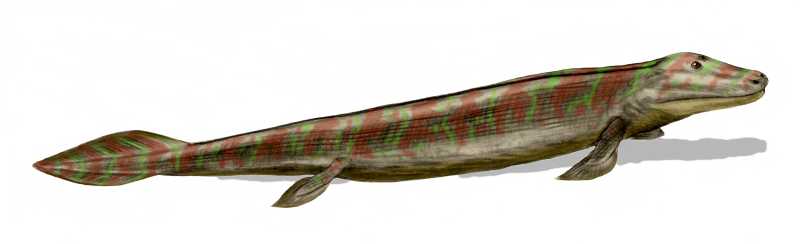
Tiktaalik
Image Credit: Nobu Tamura via Wikipedia
 Coelacanth
Image credit: Ballista via Wikipedia


To conclude his talk Mr. Miller simply reiterated his main points and walked off. There was no questions, no chance for clarification, or for dissenting opinions to be heard. This act alone I think encapsulated perfectly what Russ Miller was all about. He is not interested in engaging in a quest for the truth because he already has it. He wants to tell you what he thinks and if you disagree, well then he knows where you will go when you die. He uses the science when it is convenient and ignores it when its not.

Admitting you might be wrong is humility. Looking at the evidence that doesn't support your ideas is intellectual honestly. Taking questions after a talk is a sign of respect for your audience. Russ Miller's actions speak for themselves.

January 20, 2012

Getting Students Invested

One of the hardest parts of teaching, especially in a K-12 classroom, is getting your students engaged. This is a huge issue because the difference between having a student engaged and having one just not care can be the difference between them asking thought-provoking questions or having them disrupting the rest of the class. In training, I was told to get students engaged you need to get them invested in their education. That is great advice but at the same time it can be really hard to implement. There are only so many ways to tell a student that their education is important before they start blocking you out. That is why I got really excited by a new paper published in Sage Open that came up with a new way to get students engaged: contracts.

I have seen teachers use contracts in the classroom before, but not like this. The basic idea is you show students the requirements for each letter grade at the start of the semester. Each assignment is pass fail and can be repeated a fixed number of times. So for example to get an A you needed to get above 80% on 4 exams, do 3 of 4 written assignments, and 3 of 4 activities. To get a B in the class you would need to get above 80% on 4 exams, do 2 of the 4 written assignments, and 3 of the 4 activities. The student gets complete control over what activities and written assignments to do but for whatever assignments they chose they need to show a very strong understanding of the material. The idea is to get students to set their own goal at the start of the semester and then focus on mastering the material throughout the semester, not just remembering a percentage of it.

I really like this idea for several reasons. Giving students more control makes them more responsible for their own learning. That alone can be really motivating for many students. I also like the idea of letting students retry assignments because it makes them look at their previous work critically and look for ways to improve on it. Lastly, I think it is really good for students to learn to set goals early with a clear idea of what they will need to do to achieve that goal.

As nice as it is that this kind of student contract caters to my philosophical notions about how we should teach students, the real question is, does it work? The answer appears to be a tentative yes. To test it researchers at Western Illinois University compared two freshman psychology classes. The teacher and content was the same in both courses but one is a traditional grading system and the other used this contract grading system. To quote the press release...
...at the end of the semester, the group of students who were graded contractually were three times more likely to earn an A grade, one third as likely to fail or withdraw from the course, perceived a higher degree of control over their grade, and consistently rated their own effort, their instructor, and the course overall more favorably.
It is important to note that is was a small study and it was done on the college level so it is hard to say how well it would apply to a K-12 environment. We also can't rule out effects like the teacher being biased towards the contract grading system or the result being a statistical fluke. Still I think it is a really interesting idea. One that deserves more studies at more educational levels.


The full paper is titled "Use of Contract Grading to Improve Grades Among College Freshmen in Introductory Psychology" by Dana F. Lindemann and Colin R. Harbke and can be found at http://sgo.sagepub.com/content/early/2011/12/22/2158244011434103

October 13, 2011

Don't Trust Me

When was the last time you read a professional UFO website? What about a creationism or intelligent design website? If you're reading this blog, it probably means you agree with most of what we write about. If that's not true, good for you. There is nothing wrong with reading articles you agree with; in fact, you should do so. This is how we learn about the topics we are interested in. I think there is a problem, though, when that becomes all we read.

A few years ago I was having a friendly debate with a creationist who was a good friend of mine. As we got deeper and deeper into the various topics (dating rocks, mechanisms of selection, etc.) we began to hit walls at the edge of our respective knowledge. This alone is not a problem and I have found to be quite common in verbal debates. Something else I think we both realized though was the we were not really very familiar with each others arguments. That debate ended in what was the best conclusion to a debate I have ever had, we both recommended each other books. I recommended Finding Darwin's God by Kenneth Miller and he pointed me towards The Case for a Creator by Lee Strobel. Even now, I have that book on my bookshelf and am proud to own it. So, why am I proud to own a book that I disagree with more often than not?

The skeptical movement prides itself on making decisions based on evidence. We promote evidence, rationality, and I think above all, an interest in understanding reality. The beautiful thing about reality is that it's there. It doesn't matter how many people believe something or hear of an idea, reality will still be doing its thing. When basically everyone on the planet thought the Earth was the center of the Solar System, that did not make it true. If we really want to understand this wonderfully complex and confusing universe we live in, learning about ideas you disagree with will only bring you closer to that goal. Just make sure you take all new ideas with a healthy dose of skepticism. Doubt, question, and ask what ideas are supported by the evidence.

There is another advantage to understanding the "other side" that I think is equally important. If you understand the reason someone else came to their conclusions you are going to be able to have much more productive debates. No one likes debating a straw man or characterization of their position, skeptic or not. If you understand what they are saying first, you are much more likely to change minds. Also, I think a lot of skeptics would be surprised at how much they have in common with people who may hold irrational beliefs. I have found that often the difference between skeptic and believer is a tiny difference in how they understand evidence or statistics. Again understanding this can lead to a much more enjoyable discussion for both parities even if you don't walk away in perfect agreement. So I challenge you all. Go read a book, a blog, or listen to a podcast that challenges you views. Try to come away from it more enlightened than when you went in.

September 29, 2011

Happy Banned Books Week!

Normally, I write about science and skepticism here, but I am a self-professed bibliophile as well. One cause that's near-and-dear to my heart, therefore, is Banned Books Week. Many of the most contested books are science fiction, fantasy, or historical fiction; however, texts like Charles Darwin's On the Origin of Species often also appear on lists of banned books. Plus, part of a complete education is reading anything one can get their hands on. So, in honor of that and the joy of reading... have a wonderful banned books week!

Cross-posted from Teen Skepchick
-------------------------------------------------------------------------------------------------

Here in the U.S.A, the last week of September is always Banned Books Week. This campaign, started 13 years ago by the American Library Association, is designed to raise awareness about censorship and encourage everyone, particularly kids, to expand their horizons and read books that others find questionable enough to try and ban. It's a celebration of the right to read.

Every year, hundreds of books are challenged by school boards, religious groups, teachers, and particularly parents, often with the best intentions. These adults want to "protect" children from sexually explicit scenes, profane language, depictions of violence, descriptions of drugs, homosexuality, and things generally "unsuited to age group".

Turns out, though, that the most challenged books aren't always the ones you'd expect. Take And Tango Makes Three, for instance, the first book I ever heard of being banned. It's a children's picture book, about two penguins that successfully hatch and raise an orphaned egg. It's a sweet, heart-warming story. Who could possibly have a problem with it? Well, here's the twist: the parents in And Tango Makes Three are both male. And because of that, it has been the most challenged book for four out of the past five years, topped only by the ttyl series by Lauren Myracle in 2009.

Many of my all-time favorite books have been in the top 10 lists of banned and contested books from the last decade as well. For instance: the entire Harry Potter series; His Dark Materials trilogy, by Phillip Pullman; The Perks of Being a Wallflower, by Stephen Chbosky; Bridge to Terabithia, by Katherine Paterson; My Sister's Keeper, by Jodi Picoult; The Adventures of Huckleberry Finn, by Mark Twain; and Julie of the Wolves, by Jean Craighead George.  There's several others that I've read as well. Nearly all of them are books I'd recommend, or that had a big impact on me growing up.

Banned Books Week 2011 runs until October 1st, so there's still time to start a new (or an old favorite) story from the banned books list. Go out and exercise your right to read, and feel free to tell us about your favorite banned book.

All images credit the American Library Association

September 26, 2011

Summer Intro to Paleo: Preparation and Curation

Here's the third video in my summer introduction to paleontology course. This time, we look at how to do field work. If you haven't seen them, you can watch previous installments.


For Further Information:
http://www.dmns.org/main/minisites/fossil/vertprep.html
http://preparation.paleo.amnh.org/45/tools-equipment

Leave any questions or suggestions in the comments below!

August 1, 2011

Summer Intro to Paleo: Field Work

Here's the second video in my summer introduction to paleontology course. This time, we look at how to do field work. If you haven't seen them, you can watch previous installments.


For Further Information Links:
http://www.dmns.org/main/minisites/fossil/vertexc.html
http://www.museumoftherockies.org/Home/EXPLORE/Dinosaurs/LearnAboutDinosaurs/DiggingupDinosaurs/FossilExcavation/tabid/391/Default.aspx
http://www.wyodino.org/process/

Leave any questions or suggestions in the comments below!

Note: It may be a while before the next video is uploaded... I'm experimenting with a new way of recording these. The next installment, on lab work, should be in the next few weeks once I get that worked out.

July 27, 2011

Summer Intro to Paleo: Prospecting

Over this summer, I am teaching a six-week introduction to paleontology course to several interns at the paleontology lab I work at. As an experiment, I've been recording the classes as well, and uploading them for the viewing pleasure of everyone. Here is the first installment of that series:


June 13, 2011

Classifying Occlupanids

Biologists and paleontologists are tasked with a major challenge: looking that the diversity of life, and classifying it into groups based on morphology and genetics, in an attempt to determine what is related to what. While the details of this process, known as taxonomy, can be quite complex, it can theoretically be applied to anything. For instance, the little plastic things used to hold bread bags shut.

The purpose of the Holotypic Occlupanid Research Group is to classify occlupanids based on body shape, color, "teeth", markings, and several other characteristics. They have currently identified 6 main body plans, each of which constitutes an order on the Linnaean classification system, and have nearly 40 distinct species in the class "Occlupana".  They also keep track of mutations and mysteries, although none are currently displayed on the site. The "researchers" have also concluded that all occlupanids are parasitic, and are uniformly composed of a stiff, but flexible plastic.

The Occlupanid Collection:
The Occlupanid Collection
by Laser Burners, on Flickr
Now, this venture sounds quite silly: what's the point of classifying the bread bag thingies? In itself, probably not much. But it's a great introduction to how scientists classify real organisms. The class "Occlupana" is defined by several plesiomorphies, or ancestral characteristics: the parasitism, the plastic body, and the single "mouth". Orders, genera, and species are defined by synapomorphies, shared derived characteristics. For example, the species Pseudopalpis hayesi is defined by its green-blue color, its similarity to toxodentids (another order of occlupanid), and the fact it is only found on Thomas' English Muffins bags. This is similar to how a dinosaur fossil would be identified as a new species, although the list of characteristics studied would be much more complex.

I recommend taking some time to explore the website; it has details about how the occlupanids are discovered and classified, which serves as a great introduction to how real organisms are identified. They also have a call for contributions; if you want to explore the process of taxonomy in a hands-on, but fun way, this is a neat outlet to do so. This is a wonderful simplification of a very complex, important, and fascinating part of scientific research.

Cross-posted on Teen Skepchick

April 13, 2011

Religion and Politics in the Science Classroom

Ever since the Scope's Monkey Trials in 1925, there's been a political debate raging about the teaching of creationism and evolution in the science class. There's a lot of claims flying about: "Teach the Controversy", "Evolution is just a theory", "Intelligent Design is a science too!" Thus, so far this year, 7 different states have proposed bills that directly attack the teaching of evolution and other sciences.

As I mentioned before, this is hardly a new problem. Anti-evolution legislation is proposed every few years, and we've discussed it before. Every time, the National Center for Science Education presents its solid stance that evolution is a science and is fundamental in understanding biology; creationism, however, is not a science and has no place in the science classroom. Normally, this is enough to prevent the bill from being passed.

Man is But a WormThis year, however, there's more of a problem. In Tennessee, an anti-evolution (and anti-global warming) bill passed in the House of Representatives. It aims to let teachers "question" the sciences, and proposes they teach the alternatives. They fall into the trap I hear a lot, that "evolution is just a theory." This is not true in any sense. Evolution is a fact; we know for certain that animals change over time. We've watched it happen. The theory is Darwin's theory of evolution by natural selection, which was accepted by the scientific community over a century ago. There is zero controversy among the scientists; the "controversy" is only created by political and religious groups.

It's this made-up controversy that causes around 60% of high school biology teachers to be wishy-washy, at best, with the teaching of evolution. Many of these are not creationists themselves (although, unfortunately, some are). However, it's easier to play it safe and avoid the issue than deal with unhappy parents or school boards. Less than 30% of science teachers are willing to take the necessary strong stance that evolution is a scientific fact, and deserved to be taught as the central tenant of biology that it is.

I do think that religion can be taught in schools... in a comparative religions class. Single religions can even be taught... in private religious schools. But religious doctrine, based on texts written millennia ago, don't have any place in the empirical, ever-adapting realms of science and the science classroom. I find it very sad that, despite every rational argument that's been made for the teaching of evolution, despite a century of scientific acceptance, and despite the fact that intelligent design/creationism/creation science has been repeatedly proven to not be a science, there's still this yearly battle over such a central fact of how the world works.

April 11, 2011

Why Museums Matter

I grew up in a museum.
Ok, so there's a bit more on a nuance to it than that. I was homeschooled from elementary school through my sophomore year in high school. My "official" courses were online, through a virtual public school. I did my work at home, at the ice skating rink where my brothers practiced, at my other brother's violin studio, or where ever I happened to be on any given day. That was all great, but the place I really considered my school, and my second home, was the Denver Museum of Nature and Science. I took classes there within months of moving to Colorado. If my parents asked me where I wanted to spend the day, I would invariably say "the Museum." As soon as I was old enough, I started volunteering there. With how many hundreds of hours I spend within that building, you'd think I would have gotten tired of it. Quite the contrary; I couldn't get enough of it. I still can't. In any city or state, I feel most at home at a science museum. They spark my interest, make me ask new questions, and remind me that this universe is a fantastic place.

I was pretty pleased, therefore, when I ran across a news article titled "Surveys confirm enormous value of science museums, 'free choice' learning." Apparently, I am far from the only one whose excitement about science came from a museum. The study focused on a single museum in Los Angeles, California, recording who came there, what they thought about the museum and the role of science, and what they thought about "free choice" learning, which is the idea that the bulk of science knowledge comes not from school, but from self-education: using the Internet, watching documentaries or science programming, going to the museum. Instead of trying to present facts and figures through rote memorization and textbooks, this "free-choice" style inspires people to look further, to try to solve problems on their own, and to understand not only what science has discovered, but also how the scientific process works.

For a museum geek like me, this seems like common knowledge. But, my anecdotes do not count as scientific evidence supporting the value of museums and alternative schooling. This survey, covering over a decade and millions of people, confirms what seems basic to me: that those who have access to scientific facts in a clear, engaging way, get excited by science. And that's the first step to appreciating the natural wonders of our universe.